

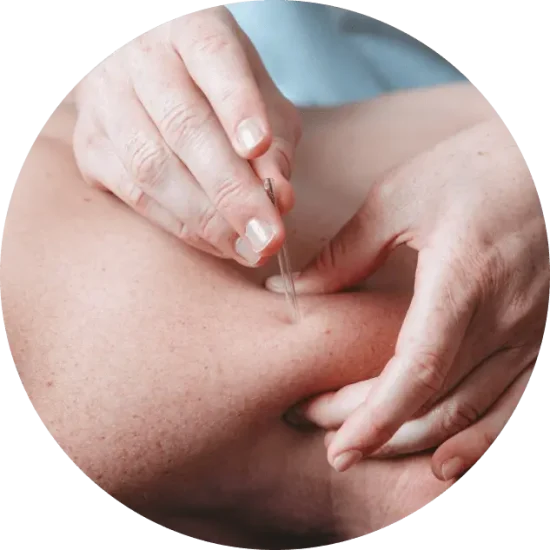

Dry needling is one of several treatment techniques that may be considered when managing your pain as you Rebuild
Our physiotherapists assess your symptoms, medical history and treatment goals to determine whether dry needling is appropriate for you.
Where indicated, dry needling may be incorporated alongside exercise rehabilitation, education and other physiotherapy treatments.
What Is Dry Needling?
Dry needling involves inserting thin, sterile, single-use needles into selected muscle or soft tissue areas as part of a physiotherapy treatment.
The technique is sometimes used to address muscle-related pain and sensitivity.
Dry needling is not the same as acupuncture, although both techniques involve the use of fine needles.

How is Dry Needling thought to work?
- Increasing blood flow and promoting the release of natural pain-relieving chemicals in the painful area.
- Decreasing the overactive electrical activity coming from the spinal cord which can in turn decrease the high resting tone of your muscles.
- Changing the way your brain interprets pain by desensitising the area, allowing you to move like you again.
Unlike traditional dry acupuncture needling, dry needling physiotherapy targets specific areas of dysfunction found in our clinical exam. Often used in combination with our other treatment strategies, dry needling physiotherapy can be effective way to kick-start your recovery. When we reduce pain with this strategy we begin restoring your ability to move naturally. The idea is to combine pain-free movement with strength and stability exercises to begin building your body’s resilience to injury and pain in the future.
How Does Dry Needling Fit Into Physiotherapy?
At Rebuild Physio, dry needling is considered an optional component of a broader treatment plan.
Your physiotherapist may also recommend:
Strengthening and mobility exercises.
Advice on managing activity and exercise loads.
Manual therapy where appropriate.
Individualised rehabilitation strategies.
Our aim is to help you understand your condition and make informed decisions about your treatment.
What Should You Expect?
Before treatment, your physiotherapist will explain the procedure, discuss potential benefits and risks, and obtain your informed consent.
Some people experience temporary soreness or minor bruising after dry needling. Other risks, including rare but potentially serious complications, depend on the treatment area and technique.
Your physiotherapist will assess whether the procedure is appropriate and discuss any relevant precautions.
The research on dry needling is mixed, and benefits cannot be guaranteed.
Frequently Asked Questions
Is dry needling painful?
You may experience a brief pinching, aching or muscle-twitch sensation. Experiences vary depending on the area treated and individual sensitivity.
Is dry needling the same as acupuncture?
No. Although both use fine needles, they are generally based on different assessment and treatment approaches.
Can I request dry needling at my appointment?
You can discuss your interest in dry needling with your physiotherapist. Treatment will depend on your assessment, informed consent and whether a suitably trained clinician is available.
Dry Needling at Rebuild Physio Glenelg
If you’re interested in dry needling or would like physiotherapy advice for muscle-related pain, our team can assess your presentation and discuss suitable treatment options.
