
Shin Pain in Runners: Shin Splints, Bone Stress Injuries and When to Get It Checked
By Lachlan Gillies | Physiotherapist & Founder of Rebuild Physio Glenelg
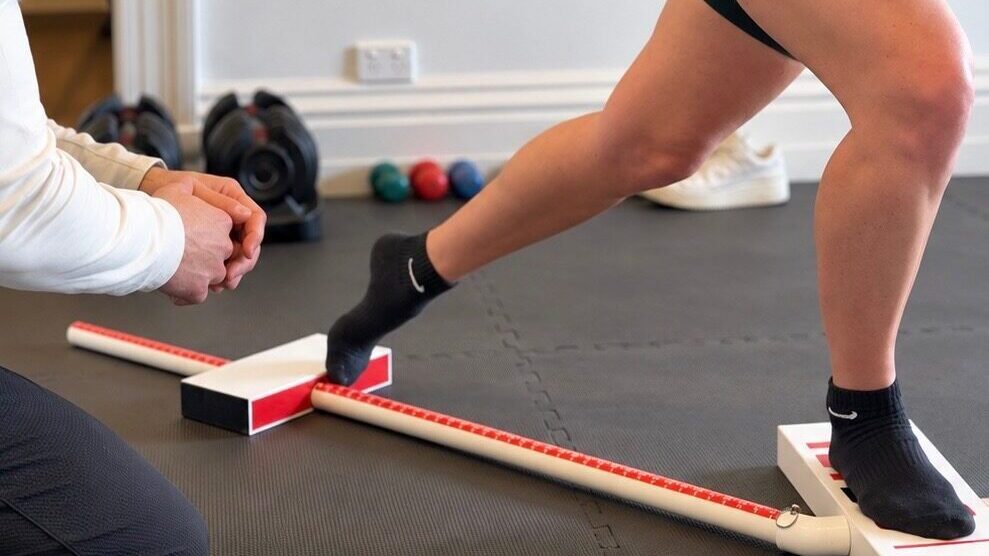
Shin pain is a common problem in runners and it can be frustrating when it starts interfering with training.
Sometimes it begins as a mild ache during a run. You might notice it during the first few kilometres before it settles as you warm up. Other times the pain gradually becomes more noticeable as your weekly running volume increases.
One of the challenges with shin pain is that not every case is the same.
A common cause is medial tibial stress syndrome, often referred to as shin splints. However, pain around the shin can also be associated with bone stress injuries and other conditions that may require a different approach.
Understanding what is causing your shin pain is therefore an important first step towards getting back to running.
What Are Shin Splints?
Shin splints is the common term often used to describe medial tibial stress syndrome, or MTSS.
It typically causes pain along the inside border of the tibia, which is the large bone in your lower leg.
Runners with MTSS will often describe a relatively broad area of discomfort rather than being able to point to one very specific painful spot.
Symptoms commonly develop during running and other impact activities. In some cases the discomfort may initially settle once you warm up, before becoming increasingly noticeable as the area becomes more irritated.
Why Do Runners Develop Shin Pain?
When I assess someone with shin pain, one of the first things I want to understand is what their running has looked like leading up to the problem.
Have they recently increased their weekly kilometres?
Have they started running more frequently?
Have they introduced faster running, hills or longer sessions?
Have they recently returned to running after some time away?
Have they changed their shoes?
Have they changed their strength training?
Our bodies are remarkably good at adapting to training, but that adaptation takes time.
When running demands increase faster than the body is currently prepared to tolerate, symptoms can develop.
There may also be strength, movement and biomechanical factors worth considering. Rather than assuming there is one particular weakness or movement pattern responsible for every case of shin pain, I prefer to assess the individual runner and determine what appears relevant to their presentation.
Are Shin Splints a Bone Stress Injury?
This is where things can become confusing.
Medial tibial stress syndrome involves the tibia and is associated with repeated loading of the lower leg. However, shin splints and a tibial stress fracture are not the same diagnosis.
That distinction is important.
Someone experiencing relatively diffuse pain along the inside of the tibia may present quite differently from a runner developing a more significant bone stress injury.
This is one of the reasons I do not recommend assuming that every case of shin pain is simply shin splints.
What Is a Bone Stress Injury?
Bone is living tissue and responds to the loads we place upon it.
Running provides repeated loading to the bones of the lower limb. With appropriate training and recovery, bone can adapt to these demands.
Problems can occur when repeated loading exceeds the bone’s current ability to recover and adapt.
Bone stress injuries can vary in severity. At the more significant end of the spectrum, a stress fracture can develop.
Training history is therefore particularly important when assessing a runner with suspected bone stress.
A sudden increase in running volume, frequency or intensity may increase the demands being placed on the bone without allowing sufficient time for adaptation.
When Should Shin Pain Be Taken More Seriously?
There are certain features that may make me more cautious about a runner’s shin pain.
Pain that becomes increasingly localised to a small area of the tibia can be more concerning than a broad area of discomfort.
Other symptoms that may warrant further assessment include pain with normal walking, pain that continues to worsen despite reducing training, pain occurring at rest or during the night, swelling, or significant difficulty tolerating impact.
These symptoms do not automatically mean you have a stress fracture.
They do mean that simply continuing to run through the pain may not be the best approach.
If a bone stress injury is suspected, referral for further medical assessment or imaging may sometimes be appropriate.
Bone Health Is About More Than Running
Training load is only part of the picture when we are considering bone stress injuries.
Bone needs adequate recovery and nutrition to adapt to training.
Depending on the individual, we may need to consider previous bone stress injuries, overall training volume, energy availability, nutrition, sleep, medications and other factors that may influence bone health.
Relative Energy Deficiency in Sport, commonly known as REDs, can also be an important consideration in some athletes.
This can occur when the energy available to support normal physiological function is insufficient relative to the demands of training and everyday life.
For runners experiencing recurrent bone stress injuries, considering the bigger picture can therefore be extremely important.
Do You Need to Stop Running With Shin Splints?
Not necessarily.
Whether you can continue running depends on what is causing the symptoms and how irritable the area has become.
Some runners with medial tibial stress syndrome may be able to continue with a modified amount of running while rehabilitation takes place.
Others may need a temporary reduction in impact before gradually building their running again.
If we suspect a more significant bone stress injury, we may need to be considerably more cautious.
This is why there is not one rule that applies to everybody with shin pain.
The aim is to determine what your shin can currently tolerate and then progressively build from there.
How Do We Assess Shin Pain in Runners?
At Rebuild Physio Glenelg, we start by understanding your symptoms and your running.
We will discuss when the pain started, where you feel it, what aggravates it and how it behaves during and after running.
We will also look at your recent training history.
Changes in weekly kilometres, running frequency, speed work, hills, racing and recovery can all provide useful information.
A physical assessment can then look at the painful area itself as well as your strength, movement and lower limb biomechanics.
Depending on your presentation, this may include assessing the foot and ankle, calf, knee, hip and other areas involved in running.
Where appropriate, we can also assess your running technique.
The aim is not simply to find something that looks different and blame it for your pain. We want to determine whether there are modifiable factors that may be relevant to the loads being placed on your shin.
Does Footwear Matter for Shin Pain?
Footwear is another factor we consider when assessing runners.
There is not one perfect running shoe that prevents shin pain for everybody.
However, it can still be useful to understand what you are running in, how long you have been using those shoes and whether you recently changed footwear around the time your symptoms developed.
Your shoes should be considered alongside your running load, strength, symptoms and overall training rather than viewed as the sole cause of the problem.
How Do We Treat Shin Pain at Rebuild Physio?
There is no single treatment that is appropriate for every runner with shin pain.
Treatment is based on what we find during your assessment, how irritable your symptoms are and what you want to return to.
Initially, our goal may be to reduce symptoms while determining an appropriate level of running or impact.
Depending on your presentation, we may use manual therapy or taping techniques such as Low Dye taping to help manage symptoms while rehabilitation begins.
These treatments are not intended to replace rehabilitation. They can sometimes be useful tools while we work on the factors that may be more important for building your longer term running capacity.
Strengthening for Shin Pain
Strength rehabilitation will depend on what we identify during your assessment.
For some runners this may involve strengthening the calf and foot. We may also work on the tibialis posterior, quadriceps, gluteal muscles and other areas that contribute to controlling and absorbing load during running.
The aim is not simply to make individual muscles stronger.
We want to progressively improve the capacity of your lower limb to tolerate the demands you place upon it.
Strength training can also form an important part of a runner’s broader training program. You can read more about strength training for runners and how it can support running performance and physical capacity.
Can Changing Running Technique Help Shin Pain?
Sometimes.
Running technique is something we can assess when it appears relevant to the runner’s presentation.
For certain runners, modifying aspects of running technique may alter the loads experienced by the lower limb.
That does not mean there is one correct way everybody should run.
Our aim with running analysis is not to make every runner look identical. It is to understand how you currently run and determine whether any practical modifications could help manage symptoms or improve your ability to tolerate training.
Any changes should make sense for the individual runner rather than being made simply because something looks different on video.
How Do You Return to Running After Shin Pain?
Getting back to running should be progressive.
Once symptoms and impact tolerance allow, rehabilitation can gradually expose the lower leg to greater demands.
This might initially involve lower levels of impact before progressing towards running.
From there we can gradually build running volume and frequency before introducing greater speed, hills or other demands where appropriate.
Your progression should reflect what you actually want to return to.
Someone wanting to complete a comfortable 5 km has different requirements from someone preparing for a half marathon or marathon.
The goal is not simply to become pain free.
The goal is to rebuild enough capacity to tolerate the running you want to do.
When Should You See a Physiotherapist for Shin Pain?
If your shin pain keeps returning whenever you increase your running, is becoming progressively worse, or is stopping you from training normally, having it assessed can help establish what may be contributing to the problem.
I would be particularly cautious if your pain is becoming very localised, affecting normal walking, occurring at rest or at night, or if you are struggling to tolerate impact.
Assessment does not automatically mean being told to stop running.
Where appropriate, we want to determine what you can continue doing while managing your symptoms and progressively rebuilding your running capacity.
How running is reintroduced depends on the diagnosis. Our guide to returning to running after injury explains how we progressively rebuild running load, including why bone stress injuries may require a different return to running approach.
Running Injury Physiotherapy in Glenelg
At Rebuild Physio Glenelg, we work with recreational runners and athletes experiencing shin pain and a range of other running related injuries.
Our approach combines a detailed assessment with symptom management, strength rehabilitation, running load management and running analysis where appropriate.
Whether your goal is getting back to your first 5 km, increasing your weekly kilometres or preparing for your next race, rehabilitation should be built around the demands you want to return to.
You can learn more about our Running Injury Physiotherapy in Glenelg or book an appointment if shin pain is currently limiting your running.
About the Author
Lachlan Gillies
Founder, Director and Physiotherapist
Rebuild Physio Glenelg
Lachlan has a particular interest in running injuries, sports physiotherapy and strength based rehabilitation. He enjoys helping runners understand their injuries, progressively rebuild their physical capacity and return to the running and training they enjoy.
