
Strength Training for Runners: Improve Your Performance and Reduce Injury Risk
By Lachlan Gillies | Physiotherapist & Founder of Rebuild Physio Glenelg

If you’re a runner looking to improve your performance, you might think the answer is simply to run more. But what if spending a little more time in the gym could actually make you a better runner?
Incorporating strength training into your routine is an effective way to improve running economy, develop muscular strength and support your running performance. Yet it’s often an overlooked aspect of a runner’s training program.
You might be wondering, “Why should I lift weights? I’m a runner, shouldn’t I just run?”
Absolutely, running is key. But combining running with an appropriate strength and conditioning program can provide an additional advantage, helping you become a stronger, more efficient runner.
And the research supports it.
The Research Behind Strength Training for Runners
Research has demonstrated that incorporating strength training into a running program can improve several important aspects of performance.
A systematic review by Blagrove and colleagues (2018), examining 24 studies, investigated the effects of strength training on middle- and long-distance running performance.
The researchers reported several important findings:
Running economy: Improvements of approximately 2–8% were reported in studies demonstrating significant benefits.
Running performance: Strength training was associated with improvements in running time-trial performance, although the magnitude varied between studies.
Training frequency: Incorporating strength training approximately 2–3 times per week was recommended to support running performance.
But what exactly is running economy?
Running economy refers to how efficiently your body uses energy while running at a particular speed. Improving your running economy means you can potentially maintain the same pace while using less energy.
Think of it as getting more out of every stride.
By developing muscular strength and improving your ability to produce force, strength training can help you become a more efficient runner.
What About Injury Prevention?
The potential benefits of strength training extend beyond running performance.
A systematic review and meta-analysis by Lauersen and colleagues investigated the effectiveness of strength training in preventing sporting injuries.
The researchers reported that strength-training interventions were associated with an average 66% reduction in sporting injuries across the included studies.
That’s a significant finding.
However, it’s important to recognise that this research included athletes from multiple sports. The results should not be interpreted as a guaranteed 66% reduction in running-specific injuries.
More recent research has also identified encouraging findings in runners.
A 2024 systematic review involving 1,904 endurance runners found that supervised exercise interventions were associated with a significant reduction in running-related injury risk in a subgroup analysis.
While these findings are promising, the subgroup analysis was exploratory and included different types of exercise interventions. Therefore, the reduction cannot be attributed exclusively to strength training.
Running injuries are multifactorial, meaning several factors can contribute to their development, including training loads, recovery, previous injuries and individual physical capacity.
Strength training is therefore best considered one component of a comprehensive approach to improving performance and managing injury risk.
The takeaway? Strength training can be a valuable addition to your running program. It should complement your running, not replace it.
Strength Training for Runners: What Should You Focus On?
A well-rounded running program should incorporate strength training that targets the major muscle groups involved in running.
This isn’t necessarily about building bigger muscles. It’s about developing the strength and physical capacity required to meet the demands of your training.
Here are five important areas to consider.
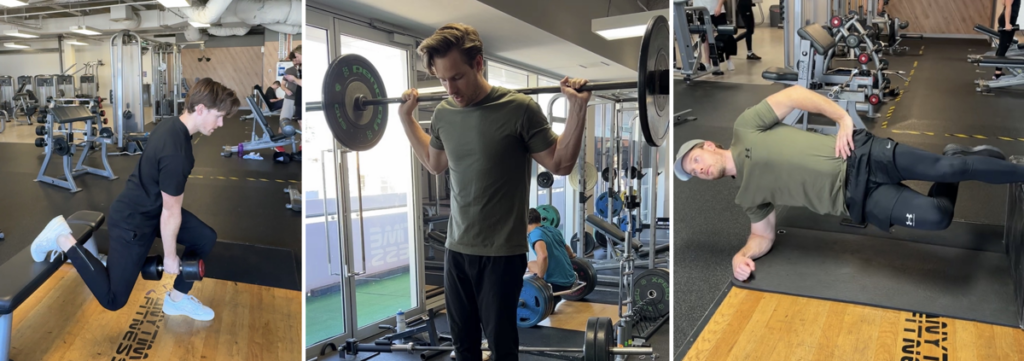
Quadriceps: Absorbing Force
Your quadriceps play an important role in absorbing and generating force during running.
Every time your foot contacts the ground, your lower limbs need to manage the forces associated with each stride.
Developing quadriceps strength can improve your ability to tolerate these repetitive demands, particularly when tackling hills.
Recommended exercises include squats, split squats and step-ups.
Glutes and Hamstrings: Power and Control
Your glutes and hamstrings contribute to hip extension, propulsion and lower-limb control throughout the running cycle.
Building strength in these muscles can improve your ability to generate force and manage the physical demands of running.
Recommended exercises include Romanian deadlifts, hip thrusts and single-leg deadlifts.
Calves: Strength and Elastic Capacity
Your calf muscles and Achilles tendon play a significant role in running performance.
Together, they help absorb, store and release energy with every stride, contributing to efficient forward movement.
Developing calf strength is particularly important for runners because of the repetitive demands placed on the calf-Achilles complex.
Recommended exercises include standing calf raises, seated calf raises and single-leg calf raises.
Hip Flexors: Supporting Your Stride
Your hip flexors help bring your leg forward during the running cycle.
Developing strength and control around your hips can support efficient lower-limb movement.
Recommended exercises include resisted hip flexion, standing band marches and controlled step-ups.
Eccentric Hamstring Strength: Controlling Movement
Eccentric strength refers to your muscles’ ability to produce force while lengthening.
During running, your hamstrings experience significant demands, particularly towards the end of the swing phase as they help control your lower limb before your foot contacts the ground.
Developing eccentric hamstring strength can improve your capacity to tolerate these demands. If hamstring pain is affecting your running, read our Hamstring Pain in Runners guide.
Recommended exercises include Nordic hamstring curls and Romanian deadlifts.
How Often Should Runners Strength Train?
One of the most common questions runners ask is how frequently they should incorporate strength training into their routine.
Research suggests that incorporating approximately 2–3 strength-training sessions per week can improve running economy and performance.
However, the ideal frequency depends on your running experience, current training volume, recovery capacity and individual goals.
For many recreational runners, two strength-training sessions per week is a practical starting point.
If you’re new to strength training, it’s important to start gradually rather than immediately introducing multiple high-intensity sessions.
Focus on performing exercises with good technique, progressively increasing resistance and allowing sufficient recovery between demanding sessions.
A practical starting approach includes:
- Aim for two strength-training sessions per week.
- Prioritise exercises targeting your major lower-limb muscle groups.
- Gradually increase resistance as your strength improves.
- Allow adequate recovery between demanding training sessions.
- Adjust your strength training around important running sessions and competitions.
Remember, the objective isn’t necessarily to leave the gym feeling exhausted. It’s to develop strength that complements your running performance.
Consistency and progressive overload are more important than trying to do everything at once.
Can Strength Training Help Prevent Running Injuries?
Running places repetitive demands on your muscles, tendons, bones and joints.
As your running volume and intensity increase, your body needs sufficient physical capacity to tolerate those demands.
Strength training can help develop that capacity by improving muscular strength and your ability to produce and absorb force.
However, strength training alone doesn’t guarantee that you’ll remain injury-free.
As discussed earlier, research across multiple sports has demonstrated substantial reductions in sporting injuries following strength-training interventions. However, the evidence for preventing running-specific injuries is less conclusive.
Your training history, running volume, recovery, previous injuries and individual physical characteristics all play a role.
This is where an individualised approach becomes particularly valuable.
If you’re experiencing recurring running injuries or struggling to increase your training volume, a physiotherapy assessment can help identify potential contributing factors and guide an appropriate rehabilitation program.
The goal is to develop the physical capacity required to meet your running demands while progressively working towards your performance goals.
How Can Physiotherapy Help You Become a Stronger Runner?
Whether you’re preparing for your first 5 km, chasing a marathon personal best or returning from an injury, having an appropriate strength and conditioning program can make a difference.
At Rebuild Physio Glenelg, our running injury physiotherapy focuses on an individualised approach to helping runners improve their strength, manage injuries and achieve their performance goals.
Our physiotherapy appointments can include:
Running Injury Assessment
Identifying potential contributing factors associated with your symptoms, including training factors, physical capacity and running technique where relevant, and developing an appropriate management plan.
Individualised Strength and Conditioning
Developing exercise programs tailored to your running goals, current strength and training demands.
Injury Rehabilitation
Helping you progressively return to running after injury through structured rehabilitation and appropriate exercise progression.
Training and Load Management
Providing guidance on balancing running, strength training and recovery to support your long-term goals.
Our approach extends beyond simply managing your immediate symptoms.
We aim to help you develop the strength, physical capacity and confidence to continue progressing towards the activities and goals that matter to you.
Ready to Take Your Running to the Next Level?
Whether you’re managing a running-related injury, looking to improve your performance or simply wanting guidance on incorporating strength training into your routine, we’re here to help.
At Rebuild Physio Glenelg, we work with runners of different abilities to develop individualised rehabilitation and exercise programs.
Book an appointment with Lachlan or our physiotherapy team at Rebuild Physio Glenelg and take the next step towards becoming a stronger runner.
Book your appointment: https://rebuildphysio.com.au/booking/
About the Author
Lachlan Gillies
Founder, Director & Physiotherapist
Rebuild Physio Glenelg

Lachlan is the founder and principal physiotherapist at Rebuild Physio Glenelg, with a strong interest in strength and conditioning, sports injury rehabilitation and helping people achieve their physical performance goals.
His clinical approach combines evidence-based physiotherapy with progressive exercise rehabilitation, helping patients develop strength, improve physical capacity and confidently return to the activities they enjoy.
Based in Glenelg, Adelaide, Lachlan works with patients of different abilities, from recreational runners to competitive athletes.
References
1. Blagrove, R. C., Howatson, G., & Hayes, P. R. (2018).
Effects of strength training on the physiological determinants of middle- and long-distance running performance: A systematic review.
Sports Medicine, 48, 1117–1149.
https://doi.org/10.1007/s40279-017-0835-7
2. Lauersen, J. B., Andersen, T. E., & Andersen, L. B. (2018).
Strength training as superior, dose-dependent and safe prevention of acute and overuse sports injuries: A systematic review, qualitative analysis and meta-analysis.
British Journal of Sports Medicine, 52, 1557–1563.
https://doi.org/10.1136/bjsports-2017-098078
3. Wu, H., Brooke-Wavell, K., Fong, D. T. P., Paquette, M. R., & Blagrove, R. C. (2024).
Do exercise-based prevention programs reduce injury in endurance runners? A systematic review and meta-analysis.
Sports Medicine, 54, 1249–1267.
