
Pain at the Back of the Ankle in Dancers: What Could Be Causing It and When to Get It Checked
By Rebuild Physio Glenelg
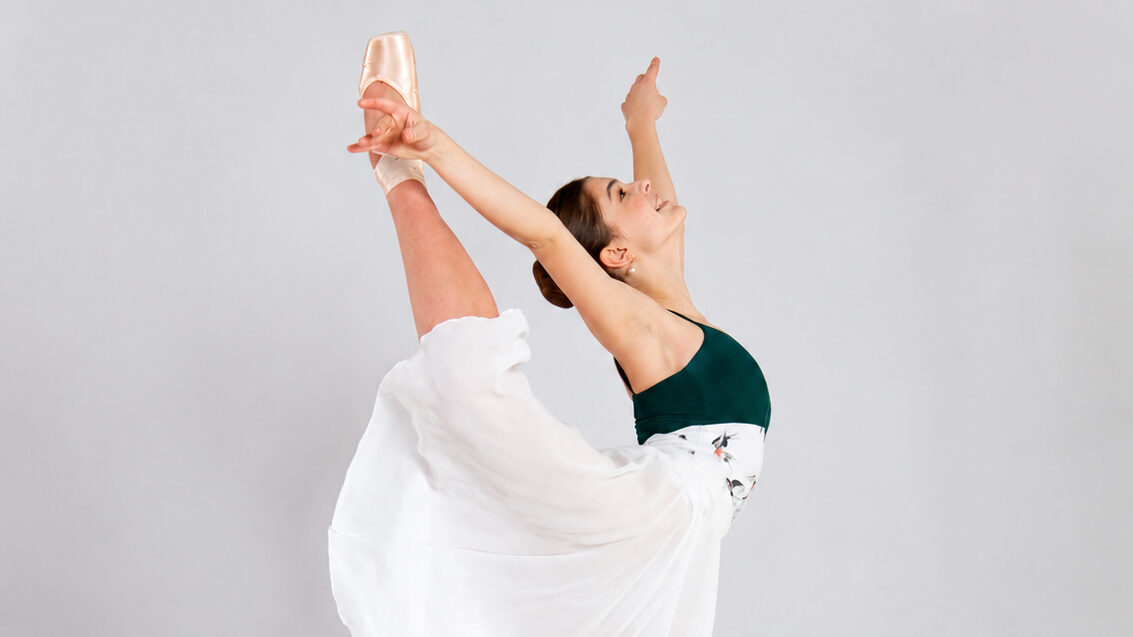
Pain at the back of the ankle can be frustrating for dancers, particularly when it starts interfering with relevé, demi-pointe, pointe work, jumping or landing.
Sometimes it begins as a mild pinch at the back of the ankle when you point your foot. You might notice it only towards the end of class or during repeated pointe work. Other times, the pain gradually becomes more noticeable as training, rehearsals or performances increase.
One of the challenges with posterior ankle pain is that not every case is the same.
The Achilles tendon can be one source of pain, but dancers can also experience posterior ankle impingement and irritation of other structures around the back of the ankle.
Understanding what is contributing to the pain is therefore an important first step towards getting back to dancing comfortably.
At Rebuild Physio Glenelg, physiotherapist Hannah has a particular interest in dance injuries. Before becoming a physiotherapist, Hannah completed full-time training through the Australian Ballet School and has experience teaching ballet, giving her an understanding of the movements and physical demands involved in dance.
Why Does the Back of the Ankle Hurt During Dance?
Dance can place considerable demands on the ankle.
Movements such as relevé, demi-pointe and pointe require the ankle to move into plantarflexion, where the foot points away from the shin.
For ballet dancers in particular, this position may be repeated many times throughout classes, rehearsals and performances.
Our bodies are remarkably good at adapting to physical demands, but that adaptation takes time.
Symptoms can sometimes develop when training demands increase faster than the body is currently prepared to tolerate. This might occur after increasing classes, adding rehearsals, preparing for a performance or returning to dance after some time away.
However, training load is only one part of the picture.
The location of the pain, which movements reproduce it, strength and physical capacity, previous injuries and the way the dancer moves may all provide useful information.
Is It the Achilles Tendon?
The Achilles tendon is one possible source of pain at the back of the ankle.
It connects the calf muscles to the heel and plays an important role in producing and absorbing force during movements such as relevé, jumping and landing.
Achilles tendon pain can develop gradually. A dancer might notice stiffness or discomfort at the beginning of class, symptoms during repeated calf loading, or pain that becomes more noticeable as training volume increases.
However, pain around the back of the ankle should not automatically be assumed to be Achilles tendinopathy.
This is particularly important in dancers because repeated end-range plantarflexion can also irritate other structures at the back of the ankle.
What Is Posterior Ankle Impingement?
Posterior ankle impingement refers to pain associated with compression of structures at the back of the ankle, particularly when the foot moves into significant plantarflexion.
For a dancer, this may feel like a pinch or pain at the back of the ankle during relevé, demi-pointe or pointe.
Some people have an additional piece of bone at the back of the ankle called an os trigonum. This can sometimes contribute to posterior ankle impingement.
However, simply having an os trigonum does not mean it is causing pain.
Many people can have anatomical variations without symptoms, which is why imaging findings need to be considered alongside the dancer’s symptoms and physical assessment.
Other soft tissue structures around the back of the ankle can also contribute to posterior ankle pain.
Does Dance Technique Matter?
Sometimes.
For dancers, it can be useful to assess the movements that actually reproduce their symptoms.
The way the foot and ankle are controlled during relevé, demi-pointe and pointe can influence where load is distributed.
For example, a dancer who loses alignment or moves into a sickled position may load the foot and ankle differently.
That does not mean that sickling or another movement pattern is automatically the cause of pain.
There is rarely one movement fault responsible for every injury.
Instead, we want to understand the individual dancer and determine whether movement control appears relevant alongside factors such as training load, strength, mobility and physical capacity.
Do You Need to Stop Dancing?
Not necessarily.
Whether you can continue dancing depends on what appears to be causing the symptoms and how irritable the ankle has become.
Some dancers may be able to continue with modified training while rehabilitation takes place.
Others may need to temporarily reduce particular movements that significantly aggravate the ankle.
For a ballet dancer, this might sometimes mean reducing pointe work and spending more time working at demi-pointe while symptoms settle and capacity is rebuilt.
This does not mean every dancer with posterior ankle pain should stop pointe work.
The aim is to determine what the ankle can currently tolerate and progressively build from there.
How Do We Assess Posterior Ankle Pain in Dancers?
At Rebuild Physio Glenelg, we start by understanding the symptoms and the dancer.
We want to know when the pain started, exactly where it is located, which movements reproduce it and how it behaves during and after dancing.
If your ankle pain began after rolling or twisting the ankle during a jump, landing or other dance movement, you may also find our guide to ankle sprains in dancers helpful.
We also look at recent training history.
Changes in class frequency, rehearsal volume, performance preparation, pointe work and time away from dance can all provide useful information.
A physical assessment can then look at the painful area itself as well as ankle movement, calf strength, balance, control and other relevant areas of the lower limb.
Where appropriate, we can also assess dance-specific movements.
For posterior ankle pain, this may include movements such as relevé, demi-pointe or other positions that reproduce symptoms.
The aim is not simply to identify something that looks different and blame it for the pain.
We want to determine which factors appear relevant to the individual dancer and what can realistically be modified.
How Is Posterior Ankle Pain Treated?
There is no single treatment that is appropriate for every dancer with pain at the back of the ankle.
Treatment depends on what we find during the assessment.
Initially, the goal may be to settle symptoms and determine an appropriate level of dance and training.
Hands-on physiotherapy may sometimes be used to help reduce pain or improve movement in the short term.
However, manual therapy alone does not rebuild the physical capacity required for dance.
Rehabilitation will depend on the individual presentation and what the dancer needs to return to.
What if the Achilles Tendon Is Involved?
When Achilles tendinopathy is contributing to the symptoms, progressive loading is an important part of rehabilitation.
You may have heard of eccentric calf exercises for Achilles tendon problems. These have been widely used in tendon rehabilitation.
However, modern tendon rehabilitation is not limited to one type of exercise.
Depending on the stage of rehabilitation and the individual dancer, loading may include isometric exercises, calf raises through different ranges, eccentric and concentric strengthening, and heavier resistance exercises.
The important principle is progressive loading.
As the tendon becomes capable of tolerating greater force, rehabilitation should progressively become more demanding.
For dancers, that eventually needs to extend beyond slow strengthening.
The calf and Achilles need to tolerate the faster loads associated with relevé, jumping, landing and repeated dance-specific movements.
Building Capacity for Dance
Reducing pain is only one part of rehabilitation.
The dancer ultimately needs enough physical capacity to tolerate the demands of training again.
Depending on the presentation, rehabilitation may include calf and lower limb strengthening, foot and ankle control, balance and progressively greater dance-specific loading.
The aim is not simply to make someone stronger in the gym.
We want that strength and capacity to transfer back into dance.
Returning to Pointe After Posterior Ankle Pain
Returning to pointe should be progressive.
A dancer may initially tolerate everyday activities and basic strengthening well but still experience symptoms when the ankle is repeatedly placed into end-range plantarflexion.
This is why returning to dance should reflect the demands the dancer actually needs to tolerate.
Depending on the injury, rehabilitation may progress from basic calf and lower limb strength towards relevé, repeated dance-specific loading and eventually greater exposure to pointe work where appropriate.
The exact progression will be different for every dancer.
The goal is not simply to become pain free.
The goal is to rebuild enough capacity to tolerate the dancing you want to do.
When Should You See a Physiotherapist for Posterior Ankle Pain?
If pain at the back of your ankle keeps returning during dance, is becoming progressively worse or is stopping you from training normally, having it assessed can help establish what may be contributing to the problem.
Assessment may be particularly useful if symptoms are repeatedly reproduced during relevé or pointe work, if the ankle is becoming increasingly painful or swollen, or if reducing training temporarily only results in the pain returning when you resume dancing.
Depending on the presentation, further medical assessment or imaging may sometimes be appropriate.
Being assessed does not automatically mean being told to stop dancing.
Where appropriate, the aim is to determine what you can continue doing while managing symptoms and progressively rebuilding your capacity.
Dance Injury Physiotherapy in Glenelg
At Rebuild Physio Glenelg, physiotherapist Hannah works with dancers experiencing pain and injury.
Hannah completed full-time training through the Australian Ballet School and has experience teaching ballet. This background gives her an understanding of dance terminology, technique and the physical demands involved in returning to training and performance.
Her approach combines physiotherapy assessment and rehabilitation with an understanding of the movements dancers actually need to perform.
Whether your goal is getting back to class, returning to pointe work or preparing for a performance, rehabilitation should be built around the demands you want to return to.
You can learn more about our Dance Injury Physiotherapy in Glenelg or book an appointment with Hannah if ankle pain is currently limiting your dancing.
About Hannah
Hannah
Physiotherapist
Rebuild Physio Glenelg
Hannah has a particular interest in dance injuries and rehabilitation. Before becoming a physiotherapist, she completed full-time training through the Australian Ballet School and has experience teaching ballet.
Her background in dance supports her understanding of movement quality, technique, strength, load management and the demands involved in helping dancers return to training and performance.
References
Russell JA, Kruse DW, Koutedakis Y, McEwan IM, Wyon MA. Pathoanatomy of posterior ankle impingement in ballet dancers. Clinical Anatomy. 2010;23(6):613-621.
Luk P, Thordarson D, Charlton T. Evaluation and management of posterior ankle pain in dancers. Journal of Dance Medicine & Science. 2013;17(2):79-83.
Chimenti RL, Neville C, Houck J, Cuddeford T, Carreira D, Martin RL. Achilles pain, stiffness, and muscle power deficits: midportion Achilles tendinopathy revision 2024. Journal of Orthopaedic & Sports Physical Therapy. 2024;54(12):CPG1-CPG32.
