
Ankle Sprains in Dancers: Rehabilitation and Returning to Dance
By Rebuild Physio Glenelg
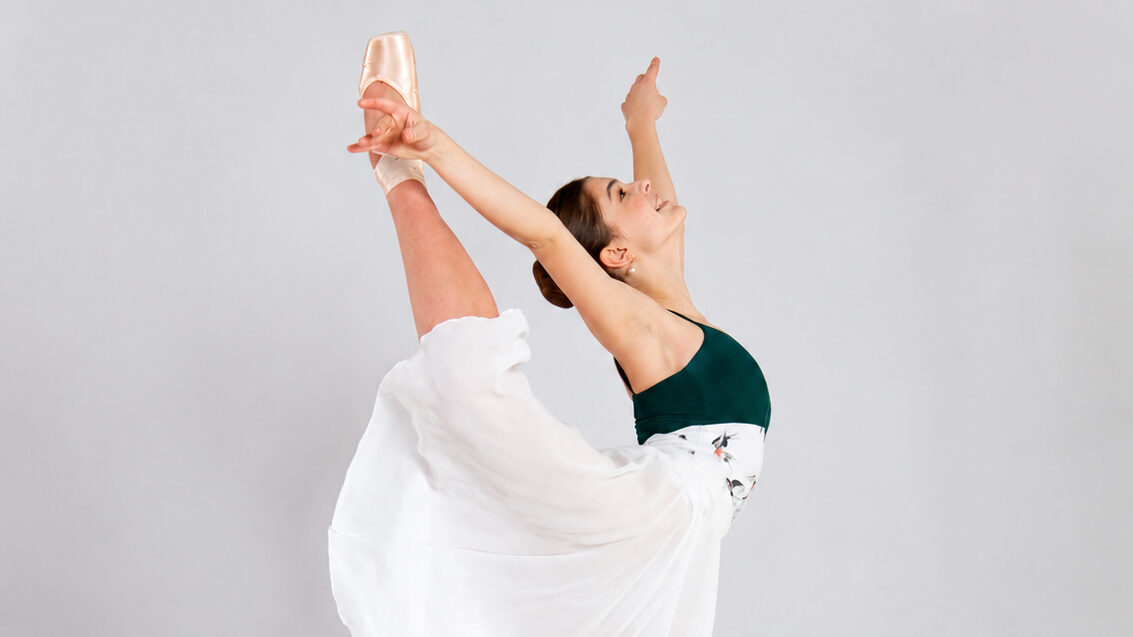
An ankle sprain can be frustrating for any athlete, but for a dancer, getting back to normal walking or everyday activity is only part of the recovery.
Dance places significant demands on the ankle.
A dancer may need to return to relevé, demi pointe, pointe work, turns, repeated jumps and landings. This means rehabilitation needs to consider not only the injured ankle, but also the strength, control and physical capacity required to return to dance confidently.
Ankle sprains are also common in dancers. They can occur during jumping and landing, when coming down awkwardly from a movement, or when losing control through demi pointe or pointe.
At Rebuild Physio Glenelg, physiotherapist Hannah has a particular interest in dance injuries. Before becoming a physiotherapist, Hannah completed full time training through the Australian Ballet School and has experience teaching ballet, giving her an understanding of dance terminology, technique and the physical demands involved in returning to training and performance.
What Happens During an Ankle Sprain?
An ankle sprain occurs when the ankle moves beyond the capacity of the supporting ligaments, resulting in injury to one or more of these structures.
The most familiar presentation is a lateral ankle sprain, involving structures on the outside of the ankle.
For dancers, the mechanism can vary.
An ankle may roll during a landing, the dancer may lose control coming down from demi pointe, or the foot may move into an awkward position during a jump, turn or transition.
The severity can also vary considerably.
Some dancers may experience relatively mild pain and swelling and remain able to walk. Others may have significant swelling, bruising, difficulty weight bearing or a feeling that the ankle is unstable.
This is one reason why it can be useful to assess the injury rather than assuming every rolled ankle is the same.
Is Every Ankle Injury Just an Ankle Sprain?
No.
Pain following an ankle injury does not necessarily mean that a simple lateral ankle sprain has occurred.
Depending on the mechanism, location of pain and severity of symptoms, other injuries may need to be considered.
These can include a higher ankle or syndesmosis injury, fractures around the ankle or foot, injuries involving the midfoot, and conditions that can cause pain at the back of the ankle in dancers, such as posterior ankle impingement.
This is particularly important if the dancer has substantial swelling, difficulty weight bearing, significant tenderness over a bone, pain in an unusual location, or symptoms that do not appear to be improving as expected.
In some cases, further medical assessment or imaging may be appropriate.
Why Are Ankle Sprains Important for Dancers?
Returning to everyday activity and returning to dance are very different goals.
A dancer may reach the point where walking feels completely comfortable but still struggle with repeated calf raises, relevé, jumping, landing or pointe work.
Dance requires the ankle and lower limb to repeatedly produce, absorb and control force.
There may also be significant requirements for balance, ankle range of motion, calf strength, foot control and coordination.
For this reason, rehabilitation should eventually prepare the dancer for the movements they actually need to perform.
Does Dance Technique Matter After an Ankle Sprain?
It can.
An ankle sprain is an injury, and we do not want to simply identify something that looks imperfect and assume it caused the injury.
However, once the initial symptoms have settled, assessing dance specific movements can provide useful information.
For example, we may look at control during relevé, how the foot and ankle are positioned during dance movements, control through the knee and lower limb, and the way the dancer takes off and lands from jumping tasks.
A dancer who moves into a sickled position may distribute load through the foot and ankle differently.
This does not mean that sickling automatically causes ankle injuries.
Instead, technique should be considered alongside the dancer’s strength, balance, previous injury history, training demands and the circumstances surrounding the injury.
What Do We Assess After an Ankle Sprain?
At Rebuild Physio Glenelg, assessment starts by understanding exactly what happened.
We want to know how the ankle was injured, where the pain is located, whether there was immediate swelling, whether the dancer could continue dancing and what activities are currently difficult.
The physical assessment may then look at the injured structures as well as factors such as:
Ankle movement
Calf strength and endurance
Foot and ankle strength
Balance and proprioception
Single leg control
Jumping and landing capacity
Lower limb strength and control
As rehabilitation progresses, dance specific movements can also become part of the assessment.
For a ballet dancer, this might include relevé, demi pointe, plié, turns or jumping tasks depending on their stage of recovery and the demands they need to return to.
The goal is to work out what the dancer can currently tolerate and what still needs to be rebuilt.
Do You Need to Completely Stop Dancing?
Not always.
Immediately following an ankle sprain, some movements may need to be reduced or temporarily avoided depending on the severity of the injury.
However, complete rest is not necessarily required throughout the entire rehabilitation process.
As symptoms improve, it may be possible to gradually reintroduce parts of class while temporarily modifying movements that place greater demands on the ankle.
Exactly what can be continued will depend on the injury and the individual dancer.
The aim is to find an appropriate level of activity while progressively rebuilding the ankle’s capacity.
How Do We Rehabilitate an Ankle Sprain in a Dancer?
Rehabilitation should progress with the dancer.
Early treatment may focus on managing pain and swelling, restoring comfortable movement and gradually returning to normal weight bearing.
As the ankle settles, rehabilitation can become progressively more demanding.
Depending on the individual dancer, this may include calf strengthening, foot and ankle strengthening, balance exercises, single leg control and progressive lower limb strengthening.
Heel raises can be particularly useful because the calf and foot need to work together to control the ankle during many dance movements.
Balance exercises can also progress beyond simply standing on one leg. Eventually, the dancer needs to control the ankle during increasingly challenging and dance specific tasks.
The goal is not simply to complete a collection of rehabilitation exercises.
It is to rebuild the physical qualities required for dance.
Returning to Jumps and Landings
Jumping is an important milestone for many dancers following an ankle sprain.
Before returning to repeated jumping, we generally want to see that the dancer has rebuilt an appropriate level of strength, control and tolerance to lower level tasks.
Jumping can then be progressively reintroduced.
This may begin with relatively simple jumping and landing drills before progressing towards greater height, speed, repetition and dance specific combinations.
The dancer also needs to tolerate the cumulative demands of class.
Jumping and landing place demands across the whole lower limb. Dancers experiencing symptoms around the knee may also benefit from reading our guide to knee pain in dancers.
Being able to perform one pain free jump is different from completing repeated jumps towards the end of a demanding session.
This is why rehabilitation should progressively build both capacity and exposure.
Returning to Dance After an Ankle Sprain
Return to dance should be a progression rather than a single test.
For a ballet dancer, this might involve progressing from basic rehabilitation exercises to barre work, then centre work and eventually more demanding dance movements.
Depending on the injury and the dancer’s level, rehabilitation may progressively reintroduce relevé, turns, small jumps, larger jumps and pointe work where appropriate.
The exact progression will be different for every dancer.
A recreational dancer returning to one or two classes each week may have very different demands from a dancer completing full time training or preparing for a performance.
The important question is not simply:
“Is the ankle pain free?”
It is:
“Is the ankle ready for what this dancer needs it to do?”
What About Returning to Pointe?
Returning to pointe following an ankle sprain should also be progressive.
Being comfortable during normal walking or even basic strengthening does not necessarily mean the ankle is ready for repeated pointe work.
The dancer may first need to demonstrate sufficient ankle movement, calf and foot strength, balance and control during less demanding tasks.
Exposure can then progressively increase through dance specific movements and eventually pointe work where appropriate.
The goal is to rebuild confidence and physical capacity rather than simply waiting a certain number of weeks and assuming the ankle is ready.
What if You Have Sprained the Same Ankle Before?
Previous ankle sprains are relevant.
Some dancers recover from the initial pain but never completely restore strength, balance or confidence in the ankle.
They may return to class because the ankle feels better, only to notice that it continues to roll or feels less stable during more demanding movements.
In this situation, rehabilitation may need to focus not only on settling symptoms but also on rebuilding the physical qualities that remain limited.
This can include strength, balance, landing control and progressively greater exposure to dance specific movements.
When Should a Dancer See a Physiotherapist After an Ankle Sprain?
If you have significantly injured your ankle, are having difficulty weight bearing, have substantial swelling or bruising, or are unsure what you have injured, an assessment can help determine what may be involved.
Physiotherapy can also be useful when an ankle appears to have improved but continues to feel weak, unstable or painful when you return to dance.
For dancers, the aim should extend beyond simply getting the ankle comfortable enough for everyday activity.
Rehabilitation should ultimately prepare the ankle for the movements and training demands you want to return to.
Dance Injury Physiotherapy in Glenelg
At Rebuild Physio Glenelg, physiotherapist Hannah works with dancers experiencing pain and injury.
Hannah completed full-time training through the Australian Ballet School and has experience teaching ballet. This background gives her an understanding of dance terminology, technique and the physical demands involved in returning to training and performance.
Her approach combines physiotherapy assessment and rehabilitation with an understanding of the movements dancers actually need to perform.
Whether your goal is getting back to class, returning to pointe work or preparing for a performance, rehabilitation should be built around the demands you want to return to.
You can learn more about our Dance Injury Physiotherapy in Glenelg or book an appointment with Hannah if ankle pain is currently limiting your dancing.
About Hannah
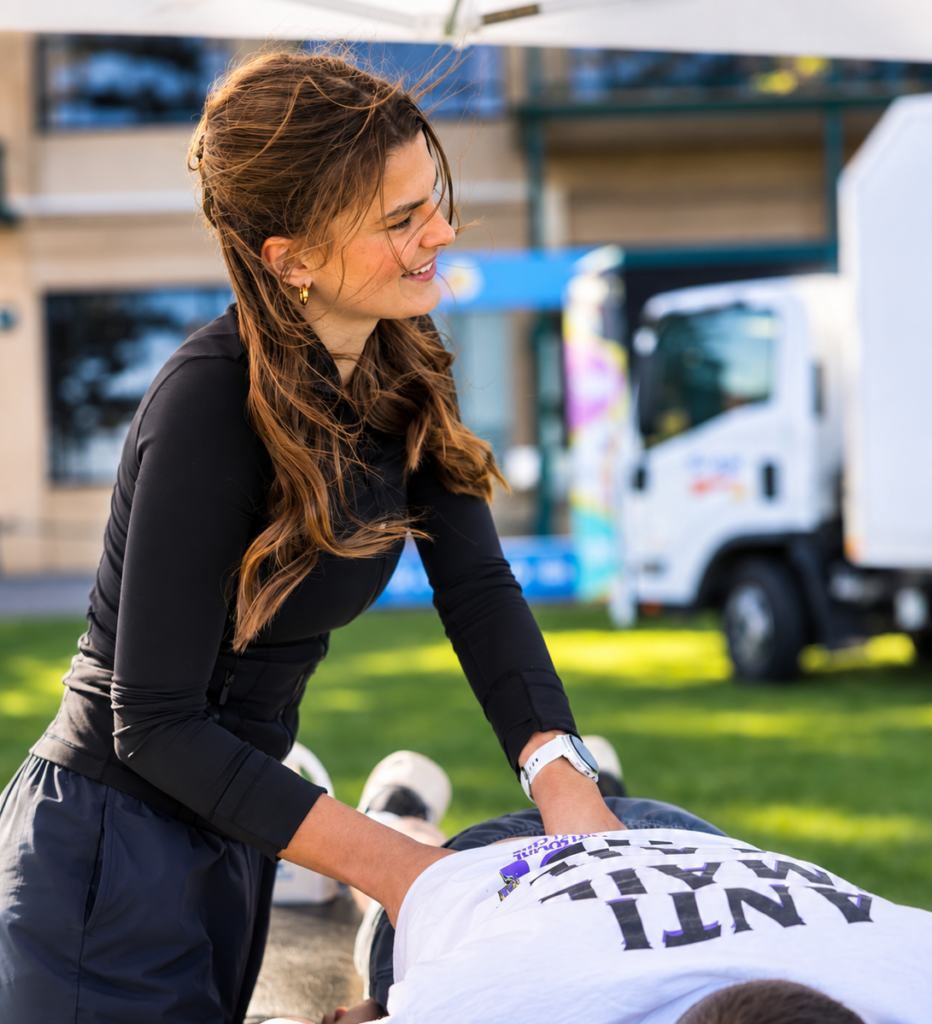
Hannah
Physiotherapist
Rebuild Physio Glenelg
Hannah has a particular interest in dance injuries and rehabilitation. Before becoming a physiotherapist, she completed full-time training through the Australian Ballet School and has experience teaching ballet.
Her background in dance supports her understanding of movement quality, technique, strength, load management and the demands involved in helping dancers return to training and performance.
References
Vassallo AJ, Trevor BL, Mota L, Pappas E, Hiller CE. Injury rates and characteristics in recreational, elite student and professional dancers: a systematic review. Journal of Sports Sciences. 2019
Russell JA. Acute ankle sprain in dancers. Journal of Dance Medicine & Science. 2010
Smith MD, Vicenzino B, Bahr R, et al. Return to sport decisions after an acute lateral ankle sprain injury: introducing the PAASS framework, an international multidisciplinary consensus. British Journal of Sports Medicine. 2021
