
Runner’s Knee (Patellofemoral Pain): Why Your Knee Hurts When Running and What Can Help
By Lachlan Gillies | Physiotherapist & Founder of Rebuild Physio Glenelg
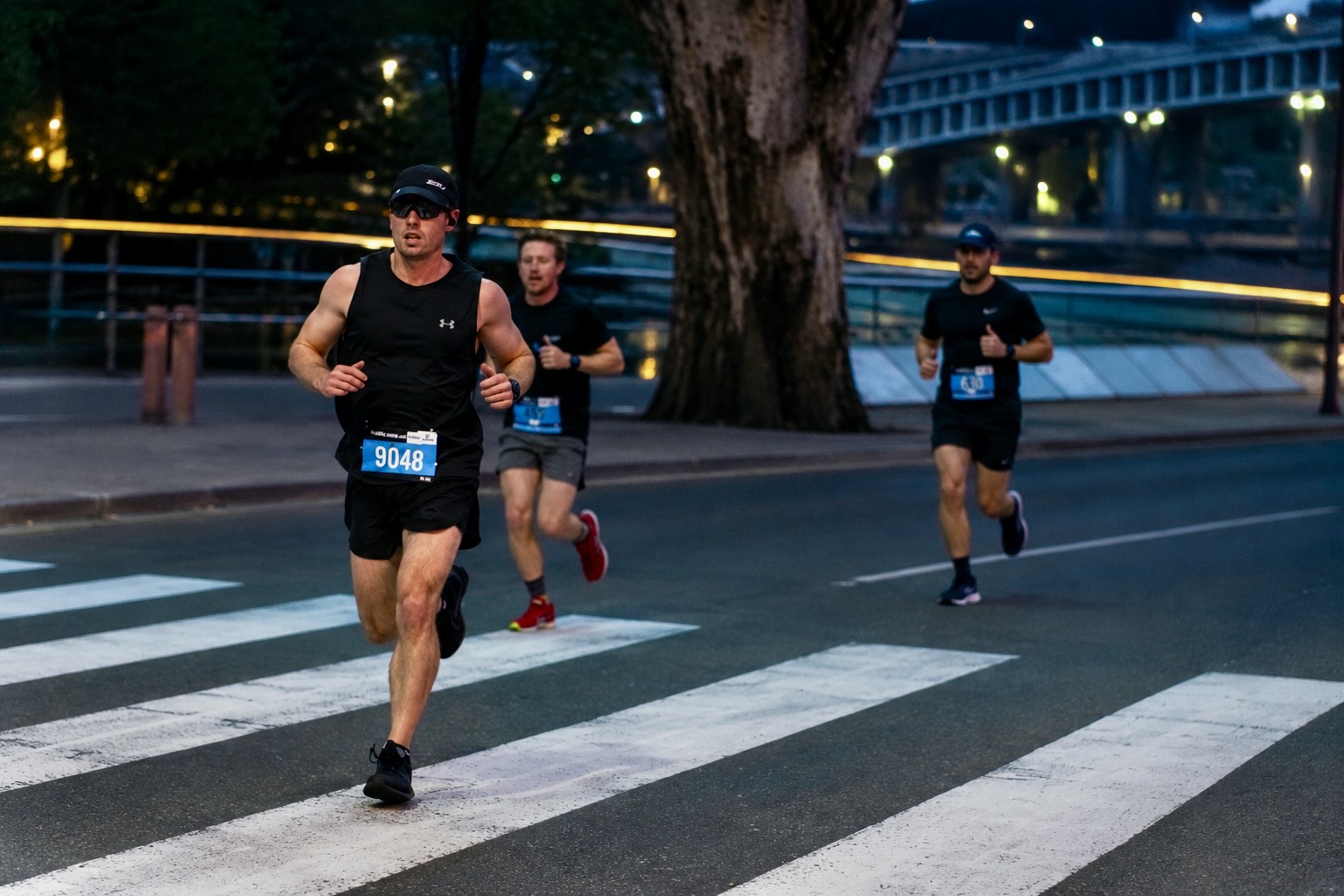
Runner’s Knee, also known as patellofemoral pain, is a common problem in runners and one I regularly see in the clinic. It typically causes pain around or behind the kneecap, particularly during running but can also be aggravated by stairs, squatting, lunging or sitting for longer periods.
One of the most important things I explain to runners is that patellofemoral pain is rarely as simple as finding one tight muscle, one weakness or one problem with running technique.
Current research supports an individualised approach that considers the runner’s symptoms, physical capacity, training demands and movement patterns rather than treating everybody with the same program.
For runners, that means understanding not only the painful knee, but also what the knee is being asked to tolerate.
What is runner’s knee?
Runner’s knee is a common term used to describe patellofemoral pain.
The patellofemoral joint is where the kneecap, known as the patella, meets the femur.
If your pain is primarily around the outside of the knee rather than around the kneecap, you can also read our ITB Pain in Runners article.
This joint is exposed to load every time we walk, squat, climb stairs and run. Loading the patellofemoral joint is normal. The knee is designed to tolerate load.
Problems can develop when the demands being placed on the knee exceed what it is currently prepared to tolerate.
For a runner, this can happen following changes in weekly running volume, intensity, hills, speed sessions, long runs or overall training frequency.
Sometimes there is an obvious change in training before symptoms begin. Other times, several smaller factors may contribute.
This is why I think it is important to assess the individual runner rather than simply treating the location of their pain.
Why does my knee hurt when I run?
There is rarely one answer that applies to every runner with patellofemoral pain.
When I assess a runner, I am interested in their recent training history, running technique, strength and capacity, single leg control, footwear and other factors that may influence how load is distributed through the lower limb.
For example, one runner may have recently increased their training faster than their body was prepared for.
Another runner may demonstrate reduced strength or endurance around the hip and knee.
Someone else may have aspects of their running technique that are worth modifying.
Often it is a combination of factors.
The aim of an assessment is not to find a single biomechanical “fault”. It is to determine which factors appear relevant to that particular runner and which ones we can realistically change.
Running technique can be part of the picture
When appropriate, I like to assess how someone actually runs.
I may look at factors such as stride characteristics, cadence and how the hip, knee and lower limb are controlled during running.
However, there is no single perfect running technique.
Research into gait retraining suggests that changing certain running characteristics can reduce running related knee pain in some people with patellofemoral pain. Current best practice recommendations suggest running retraining may be considered when an individual runner’s symptoms appear related to their running biomechanics.
That does not mean every runner needs their technique changed.
Running assessment should help answer a much more useful question:
Is there something about the way this person is running that appears relevant to their knee pain?
Strength and capacity matter
Running involves repeatedly absorbing and producing force, often thousands of times during a single run.
For this reason, I commonly assess strength and capacity through the hip, knee and lower limb.
The quadriceps are particularly important around the knee, while the muscles around the hip contribute to control of the lower limb during running.
Current best practice recommendations for patellofemoral pain support knee targeted exercise, with hip targeted exercise incorporated where appropriate.
Importantly, finding weakness does not automatically mean that weakness caused the injury.
Instead, strength testing helps us understand whether there are areas of capacity that may be useful to improve as part of rehabilitation.
For runners, I am also interested in more than someone’s ability to produce force once. Running requires the lower limb to repeatedly manage load, so muscular endurance and the ability to maintain control under fatigue can also be important.
Strength training can play an important role in building the physical capacity required for running. You can read more in our guide to strength training for runners.
Single leg control
Running is predominantly a single leg activity.
Because of this, I will often look at how a runner controls their hip, knee and foot during single leg movements.
This can provide information about strength, balance, coordination and control that may not be obvious during a standard examination.
Again, the goal is not to label normal movement as “bad”.
It is to determine whether anything we see during assessment appears relevant to the runner’s symptoms and whether improving it may increase their capacity for running.
Training load is a big part of the conversation
When someone presents with running related knee pain, one of the most useful questions can be:
What changed in your training before the pain started?
A sudden increase in weekly distance is one possibility, but running load is more than kilometres alone.
Changes in long run distance, hills, speed work, running frequency, gym training, competition and recovery can all alter the demands being placed on the knee.
Research in runners with patellofemoral pain supports education around symptom management and appropriate modification of training loads as an important part of rehabilitation.
This does not necessarily mean stopping running.
In many cases, the better question is how we can adjust running temporarily while improving the knee’s ability to tolerate more load over time.
Do running shoes matter?
Footwear can be worth considering, particularly if symptoms developed around the time of a change in running shoes.
Different shoes can influence how load is distributed through the lower limb, but there is no single running shoe that prevents patellofemoral pain.
I prefer to consider footwear as one part of the overall assessment rather than assuming that changing shoes will fix the problem.
If you are seeing a physiotherapist for running related pain, bringing your usual running shoes to the appointment can be useful.
Can hands on physiotherapy and taping help?
They can be useful in the right situation, but they should be viewed in context.
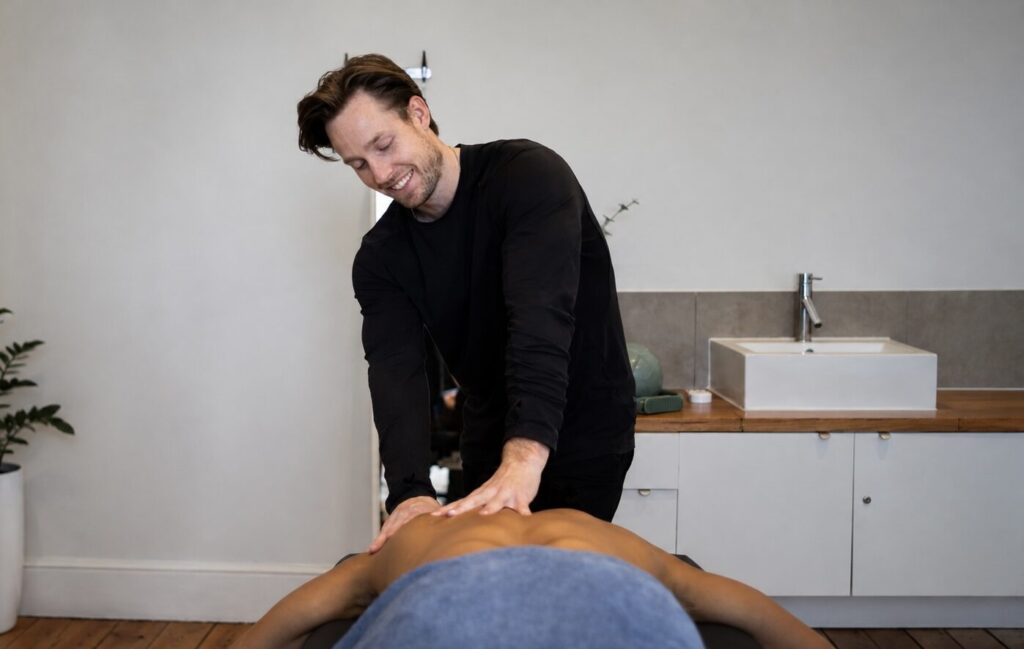
When pain is irritable, I may use hands on physiotherapy techniques or taping to help reduce symptoms and make movement or exercise more comfortable.
Current best practice recommendations recognise manual therapy and taping as potential supporting interventions when pain or irritability is making rehabilitation difficult.
The important word is supporting.
I do not see hands on treatment or taping as the entire solution to runner’s knee.
If we can reduce symptoms in the short term, we can then use that opportunity to progressively address strength, capacity, running load and other factors identified during the assessment.
Do I need to stop running?
Not necessarily.
For many runners, completely stopping is not automatically the first option.
Depending on the severity of symptoms, it may be possible to temporarily modify aspects of running such as distance, frequency, intensity or terrain while continuing to train.
Research involving runners with patellofemoral pain has highlighted the importance of education and appropriate training modification.
The right amount of running will be different for each person.
My goal is generally to find a level the runner can currently tolerate and then progressively build from there.
You can read more about how we determine a manageable starting point and progressively rebuild running load in our guide to returning to running after injury.
What does physiotherapy for runner’s knee involve?
There is no single program that I use for every runner with patellofemoral pain.
Current research supports an individualised approach.
Depending on what we find during assessment, management may involve education and training modification, progressive strengthening, running specific rehabilitation, movement or running retraining and selected strategies to help manage symptoms.
The important part is determining what is actually relevant to the person in front of me.
A recreational runner preparing for their first 5 km has very different demands from someone running 80 kilometres per week or preparing for a marathon.
Their rehabilitation should reflect that.
Building the knee back up for running
Ultimately, the goal is not simply to make the knee feel better on the treatment table.
It is to build enough capacity for the runner to tolerate the activity they want to return to.
As symptoms improve, rehabilitation should progressively become more demanding and more relevant to running.
That progression is important because running itself is a high repetition activity.
A knee that feels comfortable during everyday activities may not yet have the capacity required for someone’s normal running volume.
When should you have running related knee pain assessed?
If knee pain is persisting, repeatedly returning when you increase your running, affecting your training or preventing you from progressing towards a running goal, it may be worth having it assessed.
An assessment can also help determine whether the symptoms are consistent with patellofemoral pain or whether another condition may be contributing.
Physiotherapy for runner’s knee in Glenelg
I’m Lachlan Gillies, Principal Physiotherapist at Rebuild Physio Glenelg.
Running injuries and strength based rehabilitation are major clinical interests of mine. My approach is to understand the runner, their training and the physical demands they need to return to, rather than simply treating the painful area.
For runners with knee pain, this can involve assessing the knee alongside strength, movement, running technique, footwear and recent training to determine which factors appear most relevant.
From there, we can develop an individual rehabilitation plan aimed at reducing symptoms and progressively building your capacity to run.
If knee pain is stopping you from running or keeps returning when you increase your training, it may be worth having it assessed.
You can learn more about our Running Injury Physiotherapy in Glenelg or book an appointment if runners knee or patellofemoral pain is currently limiting your running.
About the Author
Lachlan Gillies
Founder, Director and Physiotherapist
Rebuild Physio Glenelg
Lachlan has a particular interest in running injuries, sports physiotherapy and strength based rehabilitation. He enjoys helping runners understand their injuries, progressively rebuild their physical capacity and return to the running and training they enjoy.
References
Neal BS, Lack SD, Bartholomew C, et al. Best practice guide for patellofemoral pain based on synthesis of a systematic review, the patient voice and expert clinical reasoning. British Journal of Sports Medicine. 2024;58:1486–1495.
Collins NJ, Barton CJ, van Middelkoop M, et al. 2018 Consensus statement on exercise therapy and physical interventions to treat patellofemoral pain. British Journal of Sports Medicine. 2018;52:1170–1178.
Esculier JF, Bouyer LJ, Dubois B, et al. Is combining gait retraining or an exercise programme with education better than education alone in treating runners with patellofemoral pain? A randomised clinical trial. British Journal of Sports Medicine. 2018;52:659–666.
de Souza Júnior JR, Rabelo PHR, Lemos TV, et al. Effects of two gait retraining programs on pain, function, and lower limb kinematics in runners with patellofemoral pain: a randomized controlled trial. PLOS ONE. 2024;19:e0295645.
