
Hip Pain in Runners: Why Your Hip Hurts When Running and What Can Help
By Lachlan Gillies | Physiotherapist & Founder of Rebuild Physio Glenelg
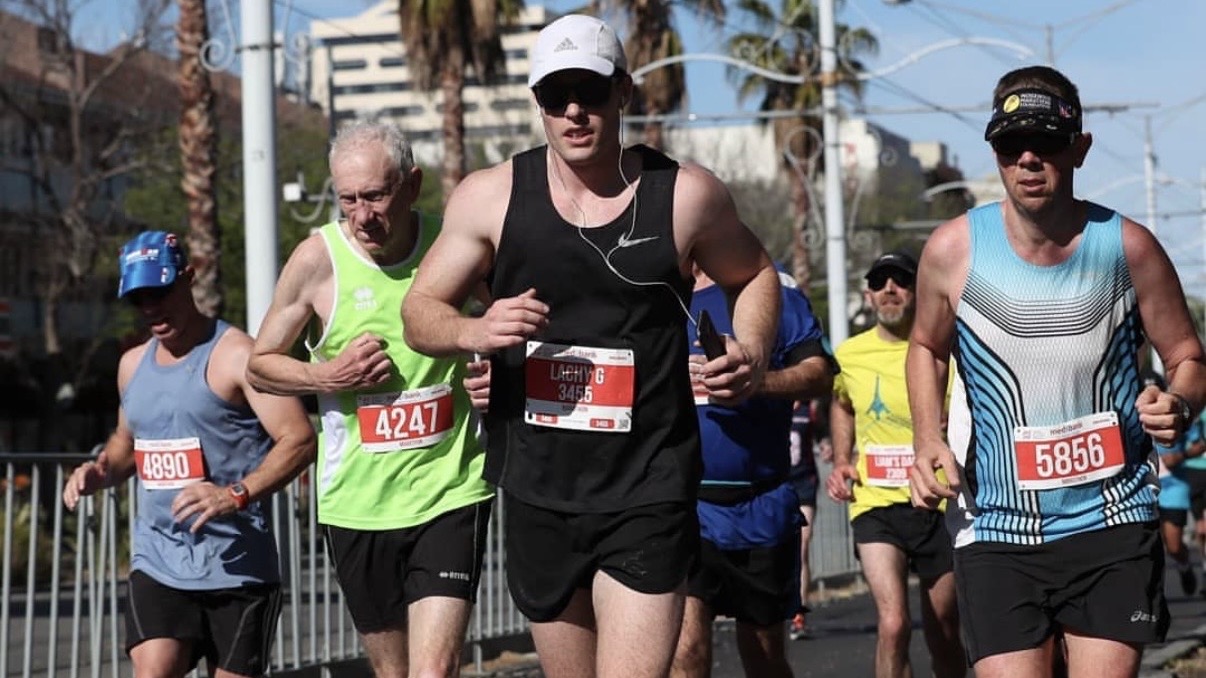
Hip pain can be frustrating for runners, particularly when it begins to affect your normal training, longer runs or even everyday activities such as walking and sleeping.
Some runners notice pain on the outside of the hip during or after running. Others may experience pain towards the front of the hip, through the gluteal region or around the side of the pelvis.
One of the important things to understand is that not all hip pain in runners has the same cause.
When I assess a runner with hip pain, I want to understand where the symptoms are coming from, what has changed in their training and whether factors such as strength, movement, running technique and overall training load may be relevant.
The goal is not simply to settle the pain.
It is to understand the problem and progressively rebuild the capacity required to run.
What Causes Hip Pain in Runners?
There are a number of potential causes of hip pain in runners.
One common cause of pain around the outside of the hip is gluteal tendinopathy. This involves the tendons of the gluteal muscles around their attachment near the greater trochanter on the outside of the hip.
However, lateral hip pain is not always gluteal tendinopathy.
Depending on the location and behaviour of your symptoms, we may also need to consider other structures around the hip, referred pain from the lower back, hip joint related pain and other potential causes.
This is why I prefer to assess the individual runner rather than assuming that all hip pain requires the same treatment.
Why Do Runners Develop Hip Pain?
When someone comes in with hip pain, one of the first things I want to understand is what their training looked like before the symptoms started.
Have they recently increased their weekly kilometres?
Have they added longer runs?
Have they introduced more hills or faster running?
Have they recently returned to running after a break?
Has their gym or strength training changed?
Have they changed their running shoes?
Often there is not one single cause.
Running places repeated demands on the muscles, tendons and joints around the hip. Our bodies can adapt extremely well to those demands, but they need adequate time and capacity to do so.
If training demands increase faster than the body is currently prepared to tolerate, symptoms can develop.
Lateral Hip Pain and Gluteal Tendinopathy
Gluteal tendinopathy is an important consideration when someone develops pain around the outside of the hip.
The gluteal tendons can be sensitive to both load and compression.
For some people, positions that increase compression around the outside of the hip can aggravate symptoms. This may include lying directly on the painful side, standing while hanging onto one hip or sitting with the legs crossed.
That does not mean these positions are inherently harmful.
If they are aggravating an irritable tendon, temporarily modifying them may help settle symptoms while rehabilitation begins.
Education and progressive exercise are particularly important in the management of gluteal tendinopathy. The LEAP trial found that an education and exercise approach produced better outcomes than a wait-and-see approach, and performed well compared with corticosteroid injection.
The important point is that rehabilitation is not simply about resting until the pain disappears. We want to progressively restore the hip’s ability to tolerate load.
Do You Need to Stop Running With Hip Pain?
Not necessarily.
Whether you can continue running depends on what is causing your symptoms, how irritable they are and how your hip responds during and after running.
Some runners may be able to continue running with temporary changes to volume, frequency, speed or terrain.
Others may benefit from temporarily reducing running while building strength and settling a more irritable presentation.
There is no single rule that applies to everybody.
My aim is usually to establish what you can currently tolerate and then progressively build from there.
How Do We Assess Hip Pain in Runners?
At Rebuild Physio Glenelg, assessment starts with understanding your symptoms and your running.
We will discuss where your pain is located, when it started, what aggravates it and how it behaves during and after exercise.
Your recent training history is also important.
Changes in weekly kilometres, frequency, hills, speed work, racing, recovery and strength training can all provide useful information.
The physical assessment will then depend on your presentation.
This may include looking at hip movement, lower back movement, strength around the hip and lower limb, and functional tasks such as squatting, lunging, stepping and single leg movements.
Rather than simply looking for one weak muscle, I want to understand how your overall physical capacity compares with the demands of your running.
Does Glute Strength Matter?
Glute strength can be relevant for runners with hip pain, but simply being told that your “glutes are weak” does not tell us enough.
Depending on your presentation, we may assess hip abductor and extensor strength as well as the strength of surrounding muscle groups.
This can include the adductors, quadriceps, hamstrings and calf.
We may also assess how you control single leg tasks, because running is essentially a repeated series of single leg contacts.
The important question is not whether one muscle is perfectly strong.
It is whether your strength and physical capacity are sufficient for the training you are asking your body to tolerate.
Strength training can play an important role in building this capacity. You can read more about strength training for runners and how it may support running performance and injury rehabilitation.
Does Running Technique Cause Hip Pain?
There is not one perfect way everybody should run.
However, running technique can be useful to assess when it appears relevant to someone’s symptoms.
When watching a runner, I may consider factors such as pelvic and trunk control, step width, cadence, stride characteristics and how the hip and lower limb move during stance.
Some runners may demonstrate greater hip adduction or pelvic drop during running. This does not automatically mean that movement is causing their pain.
The more useful question is whether modifying a particular aspect of their running changes their symptoms or the loads we are trying to manage.
Where appropriate, slow motion video can help us assess running movement and trial practical modifications.
The aim is not to make every runner look the same.
It is to determine whether there is anything useful we can modify for that individual runner.
Does Foot Strike Matter?
Foot strike is something runners often worry about.
Heel striking is not automatically a problem, and I would not change someone’s foot strike simply because they land on their heel.
However, foot strike can be considered as part of the runner’s overall gait when there is a clinical reason to do so.
Running technique changes should have a purpose rather than being made simply because something looks different on video.
Do Running Shoes Matter for Hip Pain?
Footwear is another factor worth considering, particularly if symptoms developed around the time a runner changed shoes.
There is no single running shoe that prevents hip pain in everybody.
When appropriate, we can look at what shoes you currently use, how comfortable they are, how long you have been running in them and whether changing footwear appears relevant to your symptoms.
For some runners, different footwear characteristics or additional stability may be worth trialling.
However, shoes should be considered alongside training load, strength, symptoms and running technique rather than assumed to be the cause of the problem.
How Do We Treat Hip Pain in Runners?
Treatment depends on what we identify during your assessment.
Initially, we may need to modify activities or positions that are particularly provocative while determining how much running you can currently tolerate.
Hands-on physiotherapy may sometimes be used to help manage symptoms where appropriate, particularly when surrounding areas are painful or restricted.
However, hands-on treatment is not a replacement for rehabilitation.
For many running-related hip presentations, progressively rebuilding strength and physical capacity becomes an important part of treatment.
Strengthening for Hip Pain
Strength rehabilitation should reflect the individual runner.
For someone with an irritable lateral hip presentation, rehabilitation may initially begin with exercises that are comfortable and relatively low load.
Isometric exercises may be useful in some presentations where appropriate.
As symptoms and capacity improve, rehabilitation can progressively become more challenging.
This may include strengthening the gluteal muscles as well as the adductors, quadriceps, hamstrings and calf depending on what we identify during assessment.
We may then progress towards more demanding single leg exercises and running-specific tasks.
The goal is not simply to perform a collection of “glute exercises”.
The goal is to progressively build enough strength and capacity to tolerate running.
What About Tight Muscles Around the Hip?
Runners with hip pain will sometimes describe tightness around the glutes, hip flexors, quadriceps or lower back.
These symptoms can be considered during assessment, but feeling tight does not necessarily mean a muscle needs to be stretched aggressively.
This can be particularly important with lateral hip pain, where some positions that place the hip into greater adduction may increase compression around an irritable gluteal tendon.
Rather than assuming every tight structure needs stretching, treatment should reflect what actually reproduces your symptoms and what helps you move more comfortably.
How Do You Return to Running After Hip Pain?
Returning to running should be progressive.
As symptoms settle and strength improves, we can gradually increase the amount of running your hip is exposed to.
Depending on where you are starting, this might involve rebuilding running frequency and distance before progressing towards longer runs, hills, faster sessions or racing.
Your rehabilitation should reflect what you actually want to return to.
Someone wanting to comfortably run 5 km has different requirements from someone preparing for a half marathon or marathon.
The goal is not simply to become pain free.
The goal is to rebuild enough capacity to tolerate the running you want to do.
You can read more about how we establish a manageable starting point and progressively rebuild running load in our guide to returning to running after injury.
When Should You See a Physiotherapist for Hip Pain?
If your hip pain keeps returning when you run, is becoming progressively worse, is affecting your normal training or is beginning to interfere with walking, sleeping or everyday activities, having it assessed can help determine what may be contributing to the problem.
Assessment does not automatically mean you will be told to stop running.
Where appropriate, we want to establish what you can continue doing while managing symptoms and progressively rebuilding your running capacity.
Hip Pain Physiotherapy for Runners in Glenelg
At Rebuild Physio Glenelg, we work with recreational runners and athletes experiencing hip pain and other running related injuries.
Our approach combines assessment, symptom management, strength rehabilitation, running load management and running analysis where appropriate.
Whether your goal is returning to your normal weekly running, completing your first 5 km or preparing for your next race, rehabilitation should reflect the demands you want to return to.
You can learn more about our Running Injury Physiotherapy in Glenelg or Hip Pain Physiotherapy in Glenelg, or book an appointment if your hip pain is currently limiting your running.
About the Author
Lachlan Gillies
Founder, Director and Physiotherapist
Rebuild Physio Glenelg
Lachlan has a particular interest in running injuries, sports physiotherapy and strength-based rehabilitation. As a two-time marathon runner and physiotherapist with a strength and conditioning background, he enjoys helping runners understand their injuries, rebuild their physical capacity and return to running and training.
References
Mellor R, Bennell K, Grimaldi A, et al. Education plus exercise versus corticosteroid injection use versus a wait and see approach on global outcome and pain from gluteal tendinopathy: prospective, single blinded, randomised clinical trial. BMJ. 2018;361:k1662.
Grimaldi A, Fearon A. Gluteal tendinopathy: integrating pathomechanics and clinical features in its management. Journal of Orthopaedic & Sports Physical Therapy. 2015;45(11):910–922.
Allison K, Salomoni SE, Bennell KL, et al. Hip abductor muscle activity during walking in individuals with gluteal tendinopathy. Scandinavian Journal of Medicine & Science in Sports. 2018;28(2):686–695.
Lenhart RL, Thelen DG, Wille CM, Chumanov ES, Heiderscheit BC. Increasing running step rate reduces patellofemoral joint forces. Medicine & Science in Sports & Exercise. 2014;46(3):557–564.
