
ITB Pain in Runners: Why Does the Outside of My Knee Hurt?
By Lachlan Gillies | Physiotherapist & Founder of Rebuild Physio Glenelg
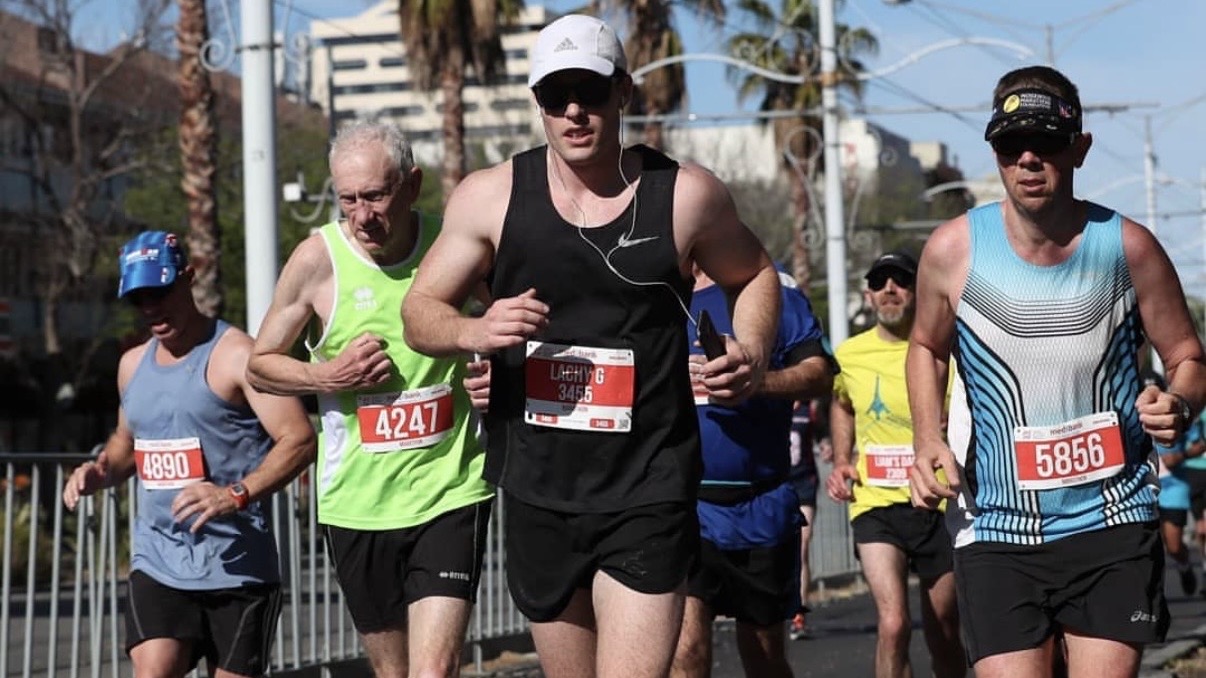
Pain on the outside of the knee is a common problem in runners and is often associated with iliotibial band pain, commonly referred to as ITB syndrome.
For some runners, the pain begins as a mild ache after longer runs. For others, it becomes a sharp and predictable pain that appears at a certain distance and eventually makes continuing to run difficult.
While the iliotibial band is often blamed for the problem, simply trying to stretch, massage or foam roll the area does not necessarily address why the symptoms developed in the first place.
At Rebuild Physio Glenelg, we assess the runner as a whole. This may include training load, running technique, hip and lower limb strength, movement control and other possible causes of lateral knee pain.
What Is the Iliotibial Band?
The iliotibial band is a strong band of connective tissue that runs along the outside of the thigh from the pelvis towards the outside of the knee.
It has close anatomical relationships with muscles around the hip, including the tensor fasciae latae and gluteal muscles, and contributes to stability and force transfer through the lower limb during activities such as walking and running.
Because of these relationships, ITB related pain should not necessarily be thought of as an isolated problem with one structure.
The runner’s training load, physical capacity, hip and lower limb function and running mechanics may all be relevant depending on the individual presentation.
What Does ITB Pain Feel Like?
ITB related pain in runners is most commonly experienced around the outside of the knee.
Symptoms may include:
Pain on the outside of the knee while running
Pain that begins after a predictable distance or duration
Symptoms that become progressively worse as a run continues
Tenderness around the outside of the knee
Pain that is aggravated by hills, particularly downhill running
Pain following a recent increase in running volume or intensity
Some runners also describe tightness or discomfort through the outside of the thigh.
However, not every pain on the outside of the knee is caused by the ITB. This is one reason an accurate assessment can be important when symptoms persist or repeatedly return.
Why Does ITB Pain Develop in Runners?
There is rarely one single explanation.
ITB related pain is often better understood by considering the relationship between the amount of running load being applied and the runner’s current capacity to tolerate that load.
A runner may have been managing well before increasing their weekly kilometres, adding speed sessions, introducing more hills or returning to running after a period away.
For other runners, physical or biomechanical factors may also be relevant.
These can include hip and lower limb strength, movement control, running technique and previous injury or training history.
The important point is that identifying ITB related pain does not automatically tell us why that particular runner developed it.
Training Load Is an Important Part of the Picture
When assessing a runner with lateral knee pain, one of the first things we want to understand is what their training looked like leading into the injury.
A sudden increase in running volume, intensity or frequency can expose the body to more load than it is currently prepared to tolerate.
Changes in hills, speed work, long runs or overall training structure may also be relevant.
This does not necessarily mean running needs to stop completely.
Depending on the severity and irritability of the symptoms, rehabilitation may involve temporarily modifying running load while gradually rebuilding the runner’s capacity.
The aim is not simply to rest until the pain disappears. It is to create a pathway back towards the running the person wants to do.
Hip Strength and ITB Pain
Hip strength is commonly considered when rehabilitating runners with ITB related pain.
The gluteal muscles contribute to controlling the pelvis and lower limb during running. Research has identified differences in hip strength in some runners with ITB syndrome, and strengthening is commonly incorporated into rehabilitation.
However, this does not mean that weak glutes are the cause of every case of ITB pain.
That distinction is important.
Rather than assuming every runner needs the same generic glute program, we assess whether strength or capacity deficits are actually present and relevant to the individual.
When they are, progressive strengthening may form an important part of rehabilitation.
Lower Limb Control and Proprioception
Strength alone does not tell the whole story.
Running requires the body to repeatedly accept and produce force on one leg. The hip, knee, ankle and foot all contribute to controlling these forces.
For some runners, rehabilitation may therefore include exercises designed to improve single leg control, balance, proprioception and the ability to manage progressively more demanding tasks.
As symptoms settle, rehabilitation should increasingly reflect the demands the runner intends to return to rather than remaining limited to basic exercises.
Can Running Technique Contribute to ITB Pain?
Sometimes.
When assessing running technique, we may consider factors such as lower limb alignment, step width, crossover gait, trunk position and how the hip and knee move while the runner is accepting load.
Some runners may demonstrate greater hip adduction or movement of the knee towards the midline. Others may run with a narrow or crossover gait or demonstrate greater lateral trunk movement.
These observations do not automatically mean we have found the cause of the injury.
There is no single perfect running technique, and many runners remain injury free with movement patterns that look quite different from one another.
However, when a particular feature appears relevant to a runner’s symptoms, a targeted modification to running technique may sometimes form part of rehabilitation.
This is why we prefer assessing the individual runner rather than giving everyone the same gait cue.
For a broader explanation of what we assess, read our Running Technique and Running Injuries article.
Does Hip Mobility Matter?
Hip mobility may also be considered during assessment.
Some runners demonstrate restrictions in particular hip movements or differences between sides. Whether these findings are important depends on the individual and how they relate to the runner’s symptoms and movement.
A mobility restriction should therefore not automatically be labelled as the cause of ITB pain.
Instead, mobility findings can be interpreted alongside strength, lower limb control, running technique, training history and the behaviour of the runner’s symptoms.
What About Tightness Around the Outside of the Thigh?
Runners with ITB related pain commonly describe tightness through the outside of the thigh.
The tensor fasciae latae, gluteal muscles and quadriceps have anatomical relationships with tissues around the lateral thigh and knee. These areas may also become sensitive when running load has exceeded what the runner is currently tolerating.
However, the sensation of tightness does not necessarily mean that the ITB itself needs to be stretched or loosened.
If the sensation repeatedly returns every time running volume increases, a more useful question may be:
Why does this area keep becoming symptomatic when I run?
That shifts the focus away from repeatedly treating tightness and towards understanding the training and physical factors contributing to the problem.
Does Foam Rolling Help ITB Pain?
Foam rolling is commonly used by runners with ITB pain.
For some people, it may provide temporary relief from feelings of tightness or discomfort. If it feels helpful, it can be a reasonable part of symptom management.
However, foam rolling alone is unlikely to address all of the factors contributing to persistent ITB related pain.
If symptoms return whenever running increases again, rehabilitation may need to address factors such as training load, strength, physical capacity and running mechanics where appropriate.
The goal should be more than making the outside of the thigh temporarily feel looser.
Not All Lateral Knee Pain Is ITB Syndrome
Pain on the outside of the knee should not automatically be diagnosed as ITB syndrome.
Depending on the exact location, behaviour and nature of the symptoms, other structures around the knee, hip or lumbar spine may need to be considered.
Pain around the front or outside of the knee can also sometimes overlap with other running related knee presentations, including patellofemoral pain.
Symptoms higher up the outside of the thigh may represent something different again.
For example, numbness, tingling or altered sensation over the outer thigh can indicate involvement of neural structures such as the lateral femoral cutaneous nerve. In these presentations, assessment may need to consider the hip, lumbar spine and nervous system rather than assuming the symptoms are coming from the ITB.
This is one of the reasons physiotherapy assessment involves more than simply identifying where it hurts.
The goal is to determine what is most likely producing the symptoms and what factors may be contributing to them.
How Do We Assess ITB Pain in Runners?
At Rebuild Physio Glenelg, assessment is individualised to the runner and their presentation.
Depending on the symptoms, we may consider:
The location and behaviour of the pain
Recent changes in running volume or intensity
Hill and speed training
Previous injuries
Hip and lower limb strength
Hip mobility where relevant
Single leg control and physical capacity
The knee, hip and lumbar spine where appropriate
Running technique where it may be contributing
The runner’s goals and upcoming training demands
When running technique is relevant, we may organise a practical running assessment as part of physiotherapy management.
This can involve observing and filming you while running on a treadmill, allowing us to review your movement and consider whether particular features of your running may be relevant to your symptoms.
How Is ITB Pain Treated?
Treatment depends on what we find during assessment.
For many runners, rehabilitation may involve a combination of symptom management, appropriate modification of running load and progressive strengthening.
Where relevant, rehabilitation may also address hip and lower limb capacity, single leg control, mobility and running technique.
Manual therapy or foam rolling may sometimes be useful for short term symptom management, but these are generally only one part of the overall approach.
As rehabilitation progresses, exercises should increasingly prepare the runner for the forces and demands they will experience when returning to normal training.
For more on developing physical capacity for running, read our Strength Training for Runners article.
Do I Need to Stop Running?
Not necessarily.
Whether running needs to be reduced, modified or temporarily stopped depends on the severity of the symptoms and how the knee responds during and after running.
For some runners, modifying distance, frequency, intensity or terrain may allow running to continue while rehabilitation takes place.
For others, a short period of greater load reduction may be appropriate before gradually rebuilding.
The important part is having a plan for progressing back towards normal running rather than repeatedly alternating between pushing through pain and complete rest.
If running has been reduced or temporarily stopped, our guide to returning to running after injury explains how we establish a manageable starting point and progressively rebuild running load.
Physiotherapy for ITB and Lateral Knee Pain in Glenelg
ITB pain can be frustrating because runners may feel completely comfortable during everyday activities, only for the pain to return at a similar point during every run.
If that pattern continues, simply resting, stretching or foam rolling the outside of the thigh may not be enough.
At Rebuild Physio Glenelg, we assess the factors that may be contributing to your lateral knee pain and build rehabilitation around your individual running demands.
This may include load management, progressive strength and conditioning, lower limb control and running technique assessment where appropriate.
You can also learn more about our broader approach on our Running Injury Physiotherapy Glenelg page.
If lateral knee pain is stopping you from running comfortably, you do not need to work out whether the problem is your ITB, strength, running technique, training load or something else before booking.
That is what the assessment is for.
Book an appointment at Rebuild Physio Glenelg
If a running injury is stopping you from training or performing at your best, book a physiotherapy appointment at Rebuild Physio Glenelg and we can assess the problem and develop an individual plan to help you return to running.
About the Author
Lachlan Gillies
Founder, Director and Physiotherapist
Rebuild Physio Glenelg
Lachlan has a particular interest in running injuries, sports physiotherapy and strength-based rehabilitation. As a two-time marathon runner and physiotherapist with a strength and conditioning background, he enjoys helping runners understand their injuries, rebuild their physical capacity and return to running and training.
References
Sanchez-Alvarado A, Bokil C, Cassel M, Engel T. Effects of conservative treatment strategies for iliotibial band syndrome on pain and function in runners: a systematic review. Frontiers in Sports and Active Living. 2024
Friede MC, Innerhofer G, Fink C, Alegre LM, Csapo R. Conservative treatment of iliotibial band syndrome in runners: Are we targeting the right goals? Physical Therapy in Sport. 2022
Aderem J, Louw QA. Biomechanical risk factors associated with iliotibial band syndrome in runners: a systematic review. BMC Musculoskeletal Disorders. 2015
van der Worp MP, van der Horst N, de Wijer A, Backx FJG, Nijhuis-van der Sanden MWG. Iliotibial band syndrome in runners: a systematic review. Sports Medicine. 2012
Fairclough J, Hayashi K, Toumi H, et al. The functional anatomy of the iliotibial band during flexion and extension of the knee: implications for understanding iliotibial band syndrome. Journal of Anatomy. 2006
