
Achilles Pain in Runners: Why It Happens and What to Do About It
By Lachlan Gillies | Physiotherapist & Founder of Rebuild Physio Glenelg
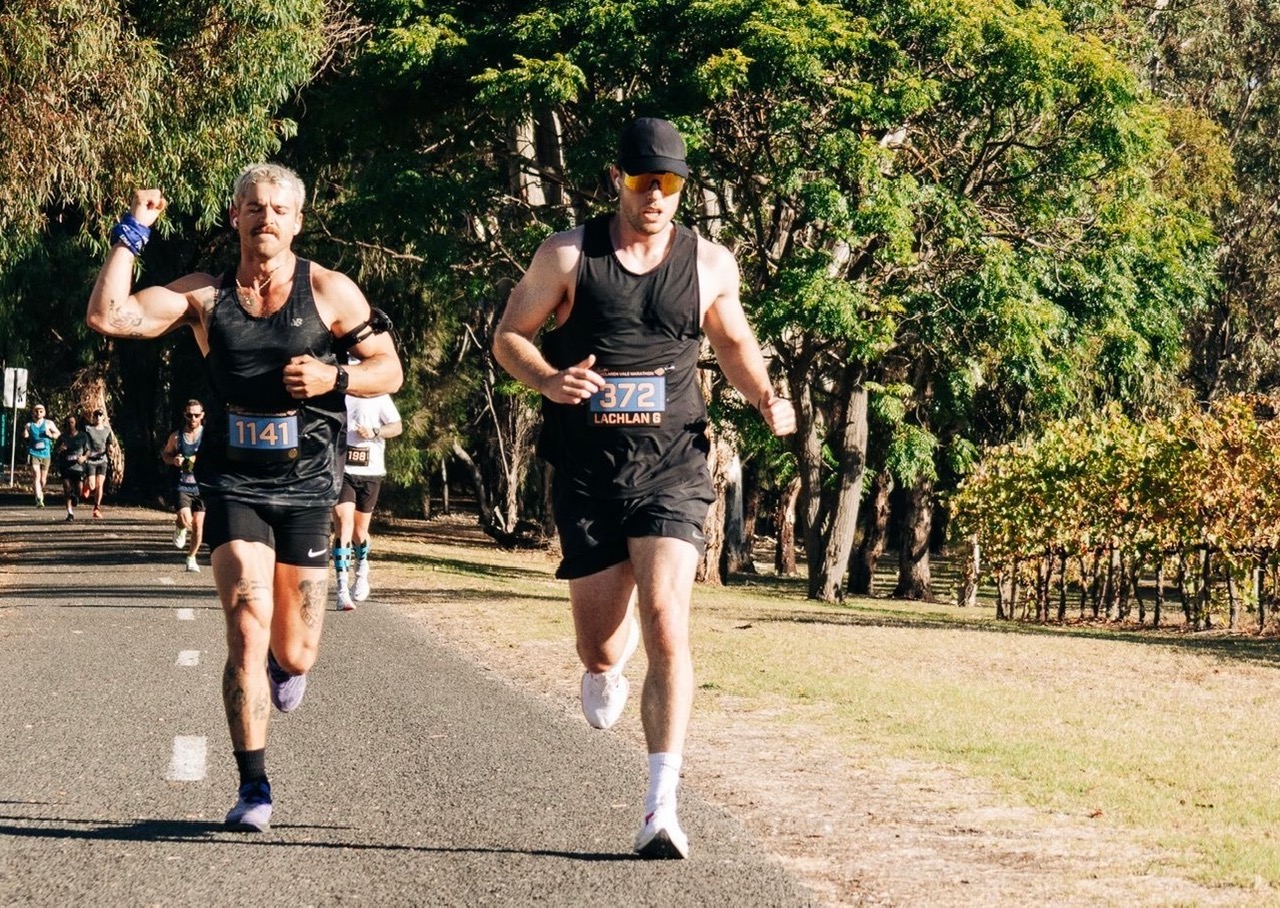
Achilles pain can be incredibly frustrating for runners.
It might start as a little stiffness when you first get out of bed. You might notice it during the first kilometre of a run before it warms up and feels better. Or perhaps running itself feels okay, only for the Achilles to become sore later that day or the following morning.
The temptation is often to stretch it, rest for a week, do a few calf raises and then try running again.
Sometimes that works.
But when Achilles pain keeps returning every time you increase your running, there is usually more to consider.
When I see a runner with Achilles pain, my goal isn’t simply to settle the painful area.
I want to understand why the Achilles is struggling with the amount or type of running you’re asking it to do, and what needs to change to get you running confidently again.
Is It Actually Achilles Tendinopathy?
Pain at the back of the ankle is commonly associated with Achilles tendinopathy, but not every pain in this area is the same problem.
Even Achilles tendinopathy itself can present differently.
Midportion Achilles tendinopathy generally causes pain further up the tendon, while insertional Achilles tendinopathy causes symptoms closer to where the tendon attaches to the heel.
That distinction can influence rehabilitation.
There are also other conditions that can cause pain around the back of the ankle and heel, including acute Achilles tendon injuries and posterior ankle impingement.
Occasionally, symptoms that appear to be coming from the lower leg may require consideration of other areas such as the lower back or nervous system.
This is why simply finding an “Achilles exercise program” online isn’t always enough.
The first step is understanding what you’re actually dealing with.
Why Does Achilles Pain Develop in Runners?
Often, Achilles pain makes more sense when we look at what has been happening with training.
Perhaps you’ve recently:
Increased your weekly kilometres
Started running more frequently
Added speed sessions
Added more hills
Returned to running after some time off
Started preparing for a race
Changed running shoes
Changed your usual training surface
Sometimes there isn’t one obvious change.
The broader issue is often the relationship between what you’re asking the Achilles to tolerate and what it currently has the capacity to tolerate.
Running places repeated demands through the calf and Achilles.
If those demands increase faster than your capacity to handle them, problems can develop.
The answer isn’t necessarily to stop loading the Achilles altogether.
In fact, building its ability to tolerate load is usually an important part of getting back to running.
Why Does My Achilles Hurt in the Morning?
Morning stiffness is a common complaint I hear from runners with Achilles tendinopathy.
You might take your first few steps after getting out of bed and notice the tendon feels stiff or sore before gradually loosening up.
For runners, I am interested not only in how the Achilles feels during a run, but also in how it responds afterwards.
If you run today, what happens later tonight?
What happens tomorrow morning?
Does the stiffness settle quickly, or is it progressively getting worse as your training increases?
That response can provide useful information about how well the Achilles is tolerating your current running load.
Do I Need to Stop Running?
Not necessarily.
This is often one of the first questions runners ask me.
For some Achilles presentations, temporarily reducing running may be appropriate.
For others, we may be able to modify training and keep some running in the program while rehabilitation progresses.
Research has shown that continued sporting activity using an appropriate pain-monitoring approach can form part of Achilles rehabilitation in selected cases.
The important part is that continuing to run doesn’t mean simply ignoring the problem and training exactly as normal.
We may need to modify things such as distance, frequency, speed or hills while gradually building the Achilles back up.
For most runners I treat, the goal isn’t simply to make the pain disappear.
It’s to get them back to the running they actually want to do.
Why Calf Strength Matters
The calf and Achilles work extremely hard during running.
And this is where rehabilitation can sometimes fall short.
Being able to walk without pain doesn’t necessarily mean you’re ready to run.
Being able to perform a few calf raises doesn’t necessarily mean you’re ready for 10 kilometres.
And being able to jog slowly doesn’t necessarily mean you’re ready for hills, intervals or racing.
Strength training for runners can help build the capacity needed to tolerate the repeated demands of running.
This is why I often look at more than whether somebody can simply perform a calf raise.
The question is whether the calf and Achilles have enough capacity for your running.
That distinction becomes particularly important for runners whose symptoms settle with rest but return as soon as they increase their training again.
Recurring calf pain or tightness can have it’s own contirbuting factors, so I have covered calf pain in runners seperately.
What About Running Technique?
For some runners with Achilles pain, I will also look at how they run.
I’m not trying to make everyone run the same way, and there isn’t one perfect running technique.
Instead, I’m interested in how an individual runner is distributing load.
Things such as foot strike, stride characteristics and how the ankle, knee and hip work together can influence the demands placed on different parts of the body.
A runner who lands further towards the front of the foot, for example, may place greater demands on the calf and Achilles than someone using a different running pattern.
That doesn’t make forefoot running bad.
It simply means it can become relevant when we’re trying to understand why a particular Achilles is being overloaded.
Likewise, I don’t change someone’s running technique simply because it looks different.
There should be a reason for changing it.
Your Achilles Isn’t Working by Itself
When pain is located at the Achilles, it’s understandable to focus entirely on the tendon.
But running involves the whole leg.
The ankle, knee and hip all contribute to absorbing and producing force every time your foot hits the ground.
That’s why Achilles rehabilitation may involve more than calf exercises.
Depending on the runner, building quadriceps, hamstring and hip strength may also form part of improving overall running capacity.
The goal is to build a leg that can tolerate the demands you’re placing on it rather than treating one painful structure in isolation.
Can Shoes Make a Difference?
Footwear can be another part of the picture.
Changing into a flatter running shoe or substantially reducing the heel-to-toe drop can alter the demands placed on the calf and Achilles.
That doesn’t mean low-drop shoes are bad.
It means a change in footwear can represent a change in load.
For an irritable Achilles, there are situations where I may temporarily consider a heel raise or footwear with a greater heel-to-toe drop while we work on building capacity.
Again, the important part is determining whether footwear is actually relevant to your presentation.
What Does Achilles Rehabilitation Look Like?
There isn’t one exercise that fixes every Achilles.
Progressive loading of the calf and Achilles is generally an important part of rehabilitation for Achilles tendinopathy.
Depending on the presentation, this may initially include exercises such as isometric calf work before progressing towards heavier and more demanding strengthening.
But runners eventually need more than slow strength exercises.
The Achilles has to tolerate the faster loading associated with running.
For someone wanting to return to longer distances, hills, faster running or racing, rehabilitation needs to progressively prepare the tendon for those demands.
That progression is where individual rehabilitation becomes important.
Someone trying to return to two easy runs each week doesn’t necessarily need the same program as someone preparing for a half marathon.
What About Massage and Hands-On Treatment?
Hands-on physiotherapy can sometimes be useful for managing associated calf tightness, ankle movement or symptoms.
I use manual therapy when I think it will help somebody move or exercise more comfortably.
But for Achilles tendinopathy, I don’t consider hands-on treatment alone to be the long-term answer.
If you want to run, eventually the calf and Achilles need to be capable of tolerating running.
That requires progressively rebuilding capacity.
Why Does My Achilles Keep Coming Back?
This is the group of runners I particularly want to help.
You rest.
It feels better.
You start running again.
Everything seems okay.
You increase your kilometres.
And the Achilles starts hurting again.
When that happens repeatedly, simply taking another week off may not address why the problem keeps returning.
There may be a mismatch between your training load and current capacity. Your calf may need more strength or endurance. Your return to running may be progressing too quickly. Footwear or running mechanics may be contributing. Or the original diagnosis may need reconsidering.
Often there isn’t one single culprit.
The important part is working out which factors actually matter for you.
Getting Back to Running Properly
Being able to jog without pain is a great milestone.
But it isn’t necessarily the finish line.
If you want to return to longer runs, hills, speed sessions or racing, the Achilles eventually needs to tolerate those demands as well.
A good return to running plan should progressively bridge the gap between where you are now and where you want to be.
For some runners, that’s returning to an easy 5 km.
For someone else, it might mean preparing for a marathon.
The rehabilitation should reflect the goal.
You can read more about how we establish a manageable starting point and progressively rebuild running load in our guide to returning to running after injury.
When Should You Get Achilles Pain Assessed?
If your Achilles pain is mild and settles quickly after a small change in training, it may improve with sensible load management.
However, I would consider having it assessed if:
The pain keeps returning when you increase your running
Morning stiffness is becoming more noticeable
You’re reducing more and more of your training because of it
You’ve rested but the pain returned when you started running again
You’re unsure whether the pain is actually coming from the Achilles
You’re preparing for an event and don’t know how much running is currently appropriate
The problem is stopping you from running the way you want to
Sudden significant pain, a popping sensation, marked weakness, swelling or difficulty walking should be assessed promptly as these can indicate a more significant Achilles injury.
Achilles Pain Physiotherapy for Runners in Glenelg
I’m Lachlan Gillies, Principal Physiotherapist at Rebuild Physio Glenelg.
Running injuries are a particular clinical interest of mine.
When I work with a runner experiencing Achilles pain, I’m interested in more than simply settling the symptoms. I want to understand what has contributed to the problem, what your Achilles can currently tolerate and what needs to be built so you can return to the running you want to do.
Depending on the individual, that may involve physiotherapy treatment, progressive strength rehabilitation, changes to training load and running assessment where appropriate.
If Achilles pain is stopping you from running normally or keeps returning whenever your training increases, you can book an appointment with me at Rebuild Physio Glenelg.
We’ll work out what is contributing to the problem and build a plan towards getting you running again.
Running Injury Physiotherapy in Glenelg
At Rebuild Physio Glenelg, we work with recreational runners and athletes experiencing achilles pain and a range of other running related injuries.
Our approach combines a detailed assessment with symptom management, strength rehabilitation, running load management and running analysis where appropriate.
Whether your goal is getting back to your first 5 km, increasing your weekly kilometres or preparing for your next race, rehabilitation should be built around the demands you want to return to.
You can learn more about our Running Injury Physiotherapy in Glenelg or book an appointment if achilles pain is currently limiting your running.
About the Author
Lachlan Gillies
Founder, Director and Physiotherapist
Rebuild Physio Glenelg
Lachlan has a particular interest in running injuries, sports physiotherapy and strength-based rehabilitation. As a two-time marathon runner and physiotherapist with a strength and conditioning background, he enjoys helping runners understand their injuries, rebuild their physical capacity and return to running and training.
References
Cook JL, Purdam CR. Is tendon pathology a continuum? A pathology model to explain the clinical presentation of load-induced tendinopathy. British Journal of Sports Medicine. 2009;43(6):409–416.
Cook JL, Rio E, Purdam CR, Docking SI. Revisiting the continuum model of tendon pathology: what is its merit in clinical practice and research? British Journal of Sports Medicine. 2016;50(19):1187–1191.
Chimenti RL, Neville C, Houck J, Cuddeford T, Carreira D, Martin RL. Achilles Pain, Stiffness, and Muscle Power Deficits: Midportion Achilles Tendinopathy Revision 2024. Journal of Orthopaedic & Sports Physical Therapy. 2024;54(12):CPG1–CPG32.
Silbernagel KG, Thomeé R, Eriksson BI, Karlsson J. Continued sports activity, using a pain-monitoring model, during rehabilitation in patients with Achilles tendinopathy: a randomized controlled study. American Journal of Sports Medicine. 2007;35(6):897–906.
