
Calf Pain When Running: Why Does My Calf Keep Getting Tight or Sore?
By Lachlan Gillies | Physiotherapist & Founder of Rebuild Physio Glenelg
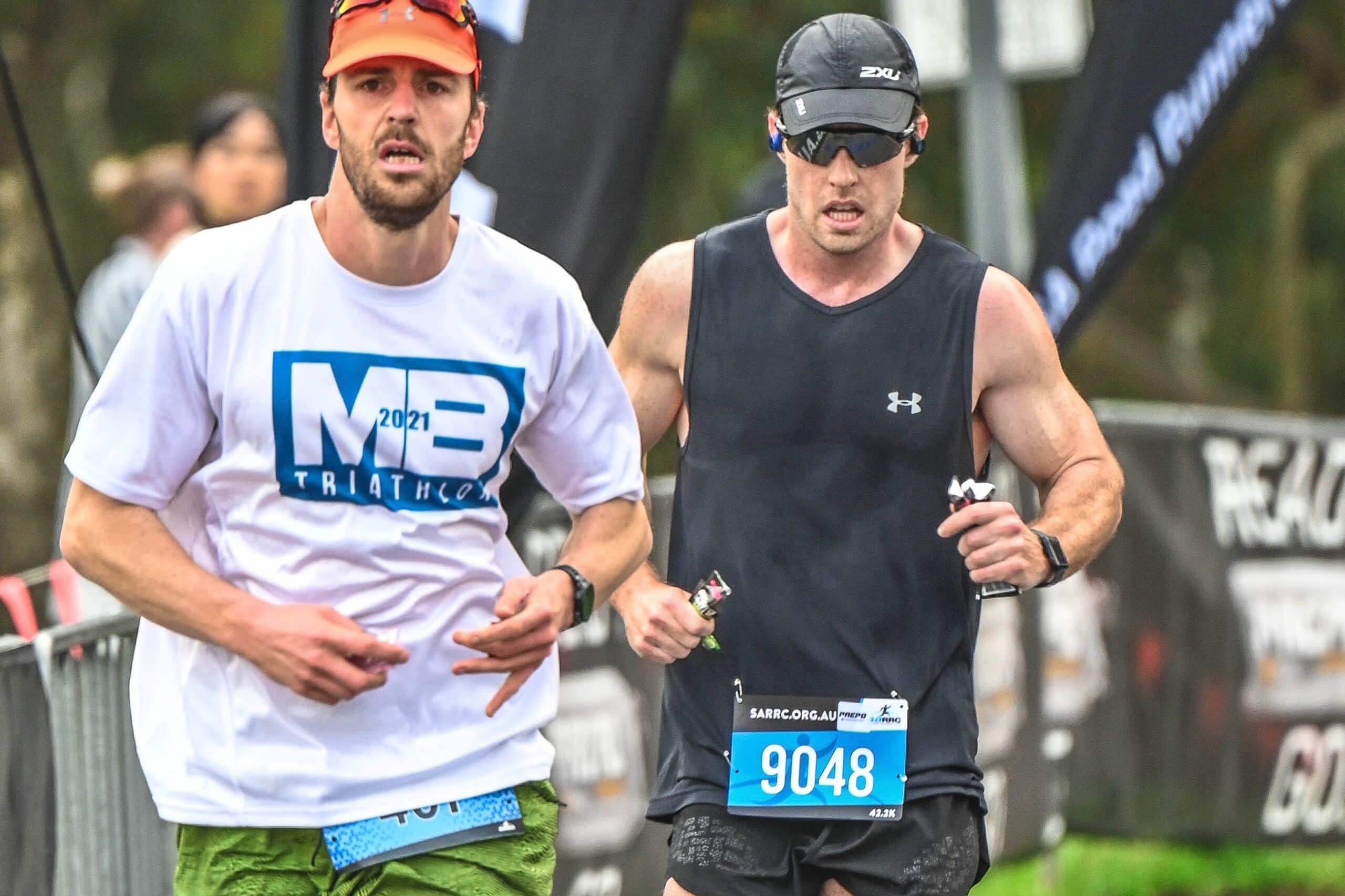
Calf pain and tightness are incredibly common complaints in runners.
Sometimes it is obvious what happened. You accelerate, push up a hill or increase your pace and suddenly feel pain in the calf.
Other times it is much less clear.
You start running and after a few kilometres your calf begins to tighten. You stretch it, massage it or take a few days off and it settles down. You start running again and eventually the same feeling comes back.
At that point, the important question is not simply:
“How do I loosen my calf?”
It is:
“Why does my calf keep tightening when I run?”
When I assess a runner with recurring calf pain or tightness, I want to understand what is causing the symptoms, how much load the calf can currently tolerate and whether there are other factors contributing to the problem.
Why Does My Calf Keep Getting Tight When I Run?
A tight calf does not necessarily mean you simply need to stretch more.
Running places repeated demands through the calf complex. Every step requires the muscles around the ankle to help control force, support you through stance and contribute to propulsion as you move forward.
That means your calves need more than flexibility. They also need enough strength, endurance and capacity for the type of running you are doing.
A runner might have no problems walking around during the day but develop calf tightness after several kilometres.
Another runner might tolerate easy running perfectly well but experience symptoms during hills, faster running or intervals.
That difference can provide useful information.
Sometimes recurring tightness is a sign that the calf is repeatedly reaching the limit of what it can currently tolerate.
Has the Calf Actually Been Strained?
Sometimes what a runner describes as a “tight calf” has started with a calf strain.
After the initial pain settles, it can be tempting to return to running as soon as walking and everyday activities feel normal.
The problem is that feeling good during daily activity does not necessarily mean the calf is ready for the demands of running.
This becomes particularly important when returning to faster running.
A calf may tolerate an easy jog before it has regained the strength and capacity required for acceleration, hills, intervals or harder efforts.
If symptoms repeatedly return as running intensity increases, simply resting until the calf feels better may not solve the underlying problem.
The calf needs to be progressively prepared for the demands you want to place on it.
Calf Strength Matters for Runners
The calf complex has a major role during running.
It has to repeatedly manage and generate substantial forces, which means calf rehabilitation needs to involve more than making the muscle feel loose.
This is why strength training can be an important part of managing recurring calf problems in runners.
Depending on the runner, rehabilitation may involve building both calf strength and endurance before gradually progressing towards more demanding exercises and eventually running specific loads.
The level required will also depend on the goal.
Someone wanting to complete two easy runs each week has very different requirements from someone preparing for a fast 10 km, half marathon or marathon.
Is It the Gastrocnemius or Soleus?
The calf is not just one muscle.
Two of the major muscles involved are the gastrocnemius and soleus, and both contribute significantly during running.
Where symptoms occur, how they started and what activities provoke them can help us understand what may be involved.
For the runner, the important point is that not every calf problem should be treated exactly the same way.
Rather than simply choosing a generic calf exercise program, rehabilitation should reflect the individual runner, their symptoms and what they are trying to return to.
Could Running Technique Be Increasing the Demand on Your Calves?
Sometimes it is useful to look at how somebody runs.
Different running patterns can distribute load differently throughout the lower limb.
For example, some runners who use a more forefoot dominant running pattern may place greater demands through the calf and Achilles complex.
That does not mean forefoot running is bad, and it certainly does not mean every runner with calf pain needs to change their technique.
But if a runner continually develops calf symptoms, understanding how they run can sometimes provide another piece of the puzzle.
Running technique should only be changed when there is a good reason to change it.
What About Ankle and Big Toe Movement?
Running requires movement throughout the foot and ankle.
If ankle movement is restricted, the body may have to find another way to move through each stride.
Movement through the big toe is also part of normal foot mechanics as the body progresses over the foot and prepares to push away from the ground.
For some runners, ankle or big toe mobility may therefore be worth considering as part of the overall picture.
That does not mean every runner with calf pain needs more ankle or big toe flexibility.
The important question is whether it is actually relevant to your symptoms and running.
Is the Calf Doing Too Much Work?
The calf does not work independently from the rest of the leg.
Running involves the ankle, knee and hip working together to manage and produce force.
This is one reason I do not automatically focus exclusively on the painful calf.
Strength and capacity elsewhere in the lower limb may also be relevant. Depending on the runner, this can include the quadriceps, hamstrings and muscles around the hip.
The goal is not simply to build a stronger calf.
It is to build a lower limb capable of handling the demands of running.
Have You Increased Your Running Too Quickly?
Training load is one of the first things worth considering when calf symptoms appear.
Sometimes there has been an obvious change.
You increased your weekly kilometres.
You started running more frequently.
You introduced hills.
You added intervals or faster running.
You returned after time away.
You started preparing for an event.
Individually, none of those things are necessarily a problem.
But the body needs time to adapt to increased demand.
If running load increases faster than the calf’s capacity to tolerate it, symptoms can develop.
That does not automatically mean you have to stop running completely. Sometimes the better approach is to temporarily modify the amount or type of running while rebuilding capacity.
Could Calf Pain Actually Be Coming From Somewhere Else?
This is an important consideration.
Not every pain felt in the calf is simply a tight or overloaded calf muscle.
In some cases, symptoms in the calf can be influenced by the lower back or nervous system. Exercise related lower leg pain can also have other causes that require a different approach.
There are also medical conditions that can cause calf symptoms.
A deep vein thrombosis, or DVT, is an important example and requires medical assessment rather than physiotherapy exercises or stretching.
This is why calf symptoms should not automatically be assumed to be muscular, particularly when the presentation is unusual, severe or accompanied by symptoms such as significant swelling, warmth, redness, unexplained shortness of breath or chest pain.
If there is concern about a DVT or another serious medical condition, urgent medical assessment is appropriate.
Should I Stretch a Tight Calf?
Stretching can certainly have a role.
Dynamic calf and ankle movements can be useful as part of a warm up before running, while some runners find static stretching useful after training.
Mobility work may also be appropriate when there is a genuine restriction that is relevant to the runner.
But if your calf becomes tight at the same point of every run, repeatedly stretching it may only address the sensation temporarily.
That is when I become more interested in why the calf keeps becoming tight in the first place.
If the issue is inadequate capacity for the amount or intensity of running being performed, flexibility alone is unlikely to be the complete answer.
What About Eccentric Calf Exercises?
Eccentric exercises involve producing force while the muscle is lengthening and can form part of calf rehabilitation.
They can be useful when appropriate, particularly as rehabilitation progresses following some calf injuries.
However, I would not view eccentric exercises as a universal solution for every runner experiencing calf tightness.
Running requires the calf complex to tolerate different types and speeds of loading.
Rehabilitation therefore needs to progress beyond one particular exercise style and eventually prepare the runner for the actual demands of their running.
Can Massage or Dry Needling Help Calf Tightness?
Hands on treatment can be useful for some runners.
Depending on the presentation, I may use manual therapy or dry needling as part of treatment to help manage symptoms and reduce the feeling of calf tightness.
That can make it easier to move and exercise.
But if your calf repeatedly becomes tight every time you return to running, simply loosening it again is unlikely to be the whole solution.
Treatment can help settle symptoms. Rehabilitation needs to address why they keep returning.
That distinction is important.
Why Does My Calf Feel Better After Rest but Hurt Again When I Run?
This is a pattern I commonly think about with running injuries.
You stop running.
The calf settles.
Walking feels normal.
You try running again.
Everything initially feels good.
You increase your distance or pace.
The calf starts tightening again.
Rest may have reduced the demand enough for symptoms to settle, but it may not have increased the calf’s capacity.
If the runner then returns to the same level of training, the same problem can reappear.
This is why successful rehabilitation is not simply about becoming pain free.
It is about building enough capacity to tolerate the running you actually want to do.
Calf Pain and Achilles Pain Can Overlap
The calf muscles and Achilles tendon form part of the same functional system, so symptoms in these areas can sometimes overlap.
A runner describing pain at the lower end of the calf may actually be experiencing an Achilles problem, while others may have symptoms involving the calf muscle itself.
Where the pain is located, how it behaves and what aggravates it can help differentiate between them.
If your symptoms are primarily around the Achilles tendon, particularly with stiffness when you first get out of bed or pain around the back of the ankle, Achilles tendinopathy may need to be considered.
Getting Back to Running After Calf Pain
Being able to jog without pain is an important milestone.
It is not always the end of rehabilitation.
Running faster, climbing hills, completing longer distances and returning to racing can all increase the demands placed on the calf.
A good return to running plan should progressively bridge the gap between what the calf can tolerate now and what you ultimately want it to tolerate.
For one runner, that might mean returning to a comfortable 5 km.
For another, it might mean getting back to intervals, football, a half marathon or marathon training.
The destination matters because it influences how far rehabilitation needs to progress.
You can read more about how we establish a manageable starting point and progressively rebuild running load in our guide to returning to running after injury.
When Should Calf Pain Be Assessed?
Minor calf soreness can sometimes settle with sensible changes to training.
An assessment becomes more worthwhile when the calf keeps tightening or hurting during runs, symptoms return whenever you increase distance or speed, you have had a previous calf strain and cannot return to your normal running, or you are continually modifying your training because you do not trust the calf.
It is also worth getting assessed when you are unsure whether the symptoms are actually coming from the calf muscle.
Sudden significant calf pain, substantial swelling, marked weakness or symptoms that raise concern about a medical cause should be assessed promptly.
Calf Pain Physiotherapy for Runners in Glenelg
I’m Lachlan Gillies, Principal Physiotherapist at Rebuild Physio Glenelg.
Running injuries are a particular clinical interest of mine.
When I see a runner with recurring calf pain or tightness, I am interested in more than simply making the calf feel looser.
I want to understand why the symptoms are occurring, what your calf and lower limb can currently tolerate and what needs to change or improve to get you back to the running you want to do.
Depending on the individual, that may involve physiotherapy treatment, progressive calf and lower limb strengthening, mobility work, changes to training load and running assessment where appropriate.
If your calf keeps tightening or becoming painful when you run, particularly if it settles with rest and then returns as you increase your training, you can book an appointment with me at Rebuild Physio Glenelg.
We can work out what is contributing to the problem and build a plan towards getting you running confidently again.
Running Injury Physiotherapy in Glenelg
At Rebuild Physio Glenelg, we work with recreational runners and athletes experiencing calf pain, tightness and a range of other running related injuries.
Our approach combines a detailed assessment with symptom management, strength rehabilitation, running load management and running analysis where appropriate.
Whether your goal is getting back to your first 5 km, increasing your weekly kilometres or preparing for your next race, rehabilitation should be built around the demands you want to return to.
You can learn more about our Running Injury Physiotherapy in Glenelg or book an appointment if calf pain or tightness is currently limiting your running.
About the Author
Lachlan Gillies
Founder, Director and Physiotherapist
Rebuild Physio Glenelg
Lachlan has a particular interest in running injuries, sports physiotherapy and strength-based rehabilitation. As a two-time marathon runner and physiotherapist with a strength and conditioning background, he enjoys helping runners understand their injuries, rebuild their physical capacity and return to running and training.
References
Green B, McClelland JA, Semciw AI, Schache AG, McCall A, Pizzari T. The Assessment, Management and Prevention of Calf Muscle Strain Injuries: A Qualitative Study of the Practices and Perspectives of 20 Expert Sports Clinicians. Sports Medicine Open. 2022;8:10.
Dorn TW, Schache AG, Pandy MG. Muscular strategy shift in human running: dependence of running speed on hip and ankle muscle performance. Journal of Experimental Biology. 2012;215(11):1944–1956.
Almonroeder T, Willson JD, Kernozek TW. The effect of foot strike pattern on Achilles tendon load during running. Annals of Biomedical Engineering. 2013;41(8):1758–1766.
Mersmann F, et al. Biarticular mechanisms of the gastrocnemii muscles enhance ankle mechanical power and work during running. Proceedings of the Royal Society B. 2023.
Green B, et al. Expert opinion on the assessment and management of calf muscle strain injuries in sport. British Journal of Sports Medicine. 2021;55(Suppl 1):A102.
